Grade 4 · Unit 5: Using units of measurement
The 24-hour clock
From 00:00 to 23:59.
Story time: The midnight flight
Uncle Masud’s flight to Dubai left Dhaka at 23:50. “Is that morning or night?” asked his nephew. “23:50 is ten minutes before midnight,” said Uncle. “The 24-hour clock never mixes up a.m. and p.m.” The flight took 5 hours 20 minutes, landing at 05:10 Dhaka time.
Flight times
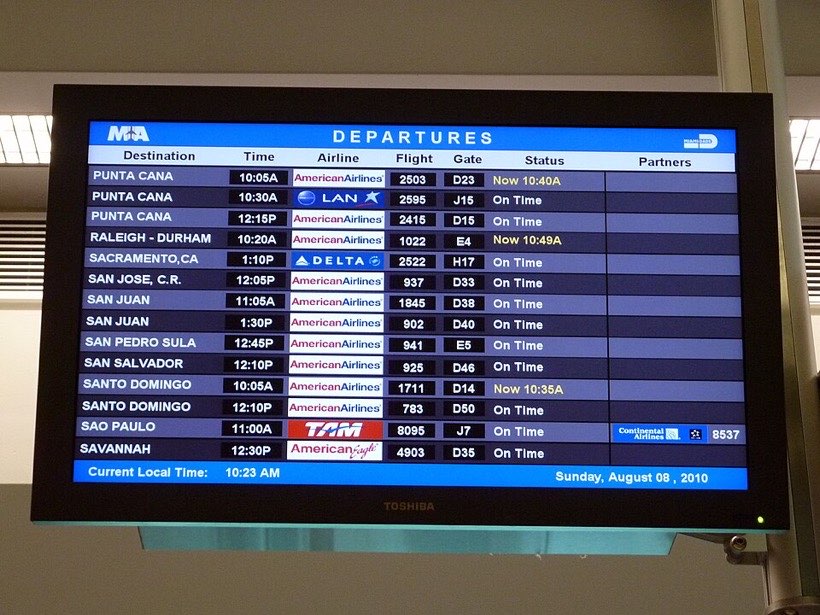
An airport screen says the flight leaves at 17:45. This is the 24-hour clock. 17:45 is 5:45 p.m.
Airports use the 24-hour clock.
12-hour and 24-hour
Morning times stay the same (with a 0 in front). Afternoon: add 12. 3 p.m. → 15:00. Midnight is 00:00.
After noon, add 12 to the hours.
Your turn: Write 7:45 p.m. in 24-hour time.
Working out durations
Count to the next hour: 09:45 → 10:00 is 15 minutes. Then whole hours: 10:00 → 13:00 is 3 hours. Then minutes: 13:00 → 13:30 is 30 minutes. Total: 3 h 45 min.
09:45 to 13:30: 15 min + 3 h + 30 min = 3 h 45 min.
Worked example
- How long from 09:45 to 13:30?
- 09:45 → 10:00 = 15 min; 10:00 → 13:00 = 3 h.
- 13:00 → 13:30 = 30 min. Total 3 h 45 min.
Timetables
Bus 1 takes 5 h 30 min from Dhaka to Chattogram. Bus 3 travels overnight – past midnight! Which bus is fastest?
A made-up bus timetable.
Did you know? The 24-hour clock avoids mix-ups between a.m. and p.m.
Time zones
When it is afternoon in Dhaka, it is morning in London. Places east of us are ahead; places west are behind. Compare times carefully: quarter to four (15:45) is later than 15:40.
Different places have different clock times.
Key words
- 24-hour clock
- A way of telling time that numbers the hours 0 to 23.
- 12-hour clock
- Uses a.m. and p.m.
Meet the mathematician: Sandford Fleming
1827–1915 · Scotland; later Canada
In 1876 Sandford Fleming missed a train in Ireland because the timetable said p.m. when it meant a.m. This gave him an idea: a 24-hour clock with no a.m. or p.m. He also suggested dividing the world into time zones. Today trains, planes and armies all use the 24-hour clock.
Activity: My day in 24-hour time
You need: paper
- Write 8 events in your day.
- Write each time in 12-hour and 24-hour form.
- Find the duration between two events.
- Make a timetable for a friend.
Think and talk
- Why do airports and trains use the 24-hour clock?
- What time is 20:30 in 12-hour time?
- How long is bus 2’s journey?
What I learnt
- I can convert between 12-hour and 24-hour times.
- I can find durations.
- I can read timetables.