Grade 4 · Unit 5: Using units of measurement
Volume and capacity
Cubic centimetres and litres.
Story time: The water tank
A family in Narayanganj has a water tank on the roof, 2 m long, 1 m wide and 1 m high. “How much water does it hold?” asked Rana. Volume = 2 × 1 × 1 = 2 cubic metres. Each cubic metre holds 1000 litres. “2000 litres – enough for about 4 days,” said his mother.
Packing boxes
Warehouses pack boxes tightly. They need to know the volume of each box. Volume is measured in cubic units.
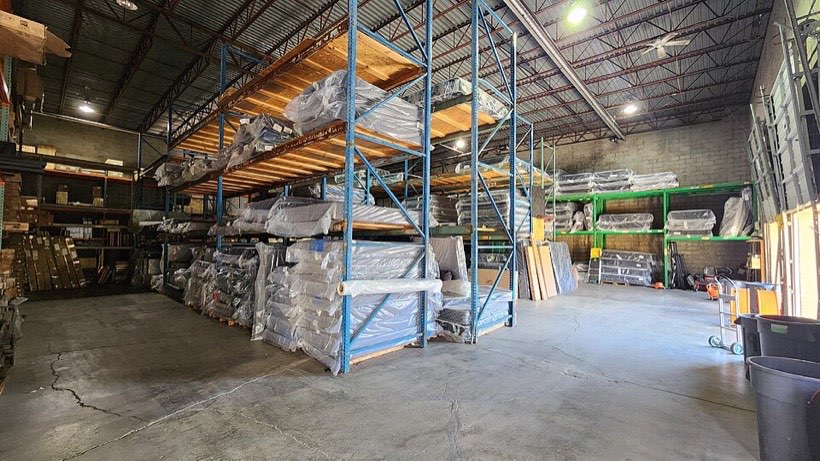
Boxes stacked in a warehouse.
Counting cubes
One layer has 5 × 3 = 15 cubes. There are 2 layers: 30 cubes. Volume = 30 cm³.
Volume = length × width × height.
Your turn: Volume of a cuboid 6 cm × 4 cm × 3 cm?
Capacity
Capacity is how much a container holds. 1 litre = 1000 ml. 1.75 l = 1750 ml.
The jug holds 1.75 litres = 1750 ml.
Volume and capacity link
1 cubic centimetre holds 1 millilitre. A cube 10 cm on each side has volume 1000 cm³. It holds 1 litre.
A 10 cm cube holds exactly 1 litre.
Worked example
- A box is 10 cm × 10 cm × 10 cm.
- Volume = 1000 cm³.
- 1000 cm³ = 1 litre, so it holds 1 litre.
Did you know? An Olympic swimming pool holds about 25 lakh litres of water.
Key words
- volume
- The space a 3D object takes up.
- cubic centimetre
- A cube 1 cm on each side (cm³).
- millilitre
- 1 ml has the same volume as 1 cm³.
Meet the mathematician: Bonaventura Cavalieri
1598–1647 · Milan, Italy
Cavalieri imagined solid shapes as stacks of very thin slices, like a sliced loaf. He showed that two shapes with the same slices at every height have the same volume. This is called Cavalieri’s principle. It helped later mathematicians invent calculus.
Activity: Make a litre
You need: card, tape, ruler, rice or sand
- Make an open cube 10 cm on each side.
- Fill a 1 litre bottle with rice.
- Pour it into your cube.
- Does it fill it exactly?
Think and talk
- How many 1 cm cubes fit in a 10 cm cube?
- Why does a 10 cm cube hold 1 litre?
- Which has more volume: a 4 × 4 × 4 cube or a 2 × 8 × 4 cuboid?
What I learnt
- I can find volume by counting cubes and using l × w × h.
- I can convert litres and millilitres.
- I know 1 cm³ = 1 ml.