Fractions on a number line
Fractions are numbers between whole numbers.
Story time: The rain gauge
Moni put a rain gauge in her school garden during the monsoon. On Monday the rain filled it to 3/10 of a centimetre, on Tuesday to 7/10. “Where do those go on my number line?” she wondered. She split the gap from 0 to 1 into ten equal parts and marked them both.
Measuring rainfall
Rain is measured in parts of a unit. Fractions help us measure between whole numbers. A number line shows where they fit.
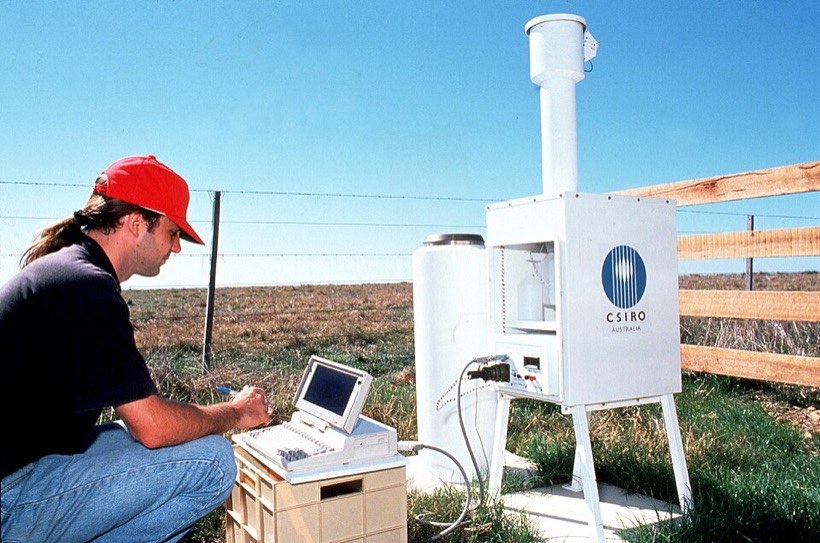
Weather stations measure rainfall to parts of a centimetre.
Quarters between 0 and 1
Split the gap from 0 to 1 into 4 equal parts. Each jump is ¼. 4/4 is the same as 1 whole.
¼, ½ (2/4) and ¾ between 0 and 1.
Worked example
- Where is ¾ on a number line from 0 to 1?
- Split the line into 4 equal parts.
- Count 3 parts from 0: that is ¾.
Past 1
Fractions continue past 1. 1½ is halfway between 1 and 2. This is a mixed number.
1½ and 2½ on a number line.
Tenths
Split 0 to 1 into 10 equal parts: tenths. 3/10 is three jumps from 0. Tenths are also written 0.3 – a decimal!
3/10 and 7/10 on a number line.
Your turn: Is 0.7 nearer to 0 or to 1?
Did you know? A metre ruler is split into tenths (decimetres) and hundredths (centimetres).
Hundredths and percent
A grid of 100 squares shows hundredths. 50 out of 100 is 50 percent, written 50%. 50% is the same as ½, and 25% is the same as ¼.
Half of the hundred squares are shaded.
Key words
- number line
- A line with numbers marked in order.
- tenth
- One of 10 equal parts. Written 1/10 or 0.1.
Meet the mathematician: John Wallis
1616–1703 · Kent, England
John Wallis was an English mathematician. In 1685 he described numbers as points on a line – the idea behind the number line. He also gave us the symbol ∞ for infinity. During a war he even used maths to decode secret messages.
Activity: Human number line
You need: a rope, fraction cards
- Lay a rope: one end is 0, the other is 2.
- Each child gets a fraction card.
- Stand where your fraction belongs.
- Check: are equivalent fractions standing together?
Think and talk
- Where would 2/3 go on a line from 0 to 1?
- Which is closer to 1: ¾ or 7/10?
- How many halves make 3 wholes?
What I learnt
- I can place fractions on a number line.
- I can count in fractions past 1.
- I know tenths can be written as decimals.