Grade 3 · Unit 1: Number and place value
Inverse operations
Undo to check or find the unknown.
Story time: The secret number
Rafi told his sister a riddle: “I thought of a number. I added 27 and got 64.” “Easy,” said Sadia. “Just undo it. 64 take away 27.” She worked out 37. “Your number was 37!” Rafi was amazed. Undoing a step is the trick of inverse operations.
Undo it!
Opening a lock undoes closing it. In maths, inverse operations undo each other. Adding 25 is undone by taking away 25.
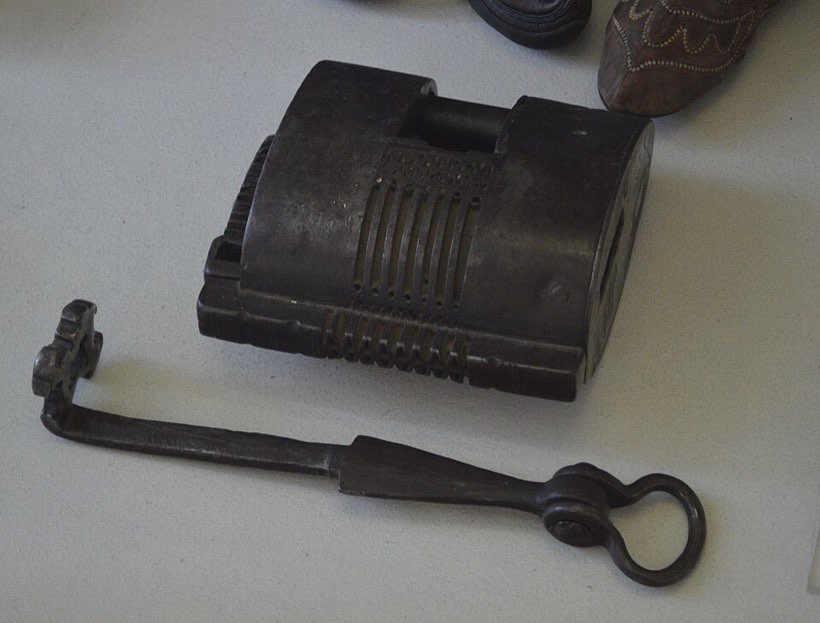
Locking and unlocking: one action undoes the other.
Addition and subtraction
A part-whole model shows both. Parts add to make the whole. Whole minus one part gives the other part.
75 + 45 = 120, so 120 − 45 = 75 and 120 − 75 = 45.
Multiplication and division
Multiplication and division are inverses too. 4 × 7 = 28. So 28 ÷ 4 = 7.
4 × 7 = 28, so 28 ÷ 4 = 7 and 28 ÷ 7 = 4.
Find the unknown
A number went into the machine and 91 came out. The machine adds 36. Work backwards: 91 − 36 = 55. ☐ = 55.
What went in? Undo + 36 with − 36.
Worked example
- A number is multiplied by 4 and gives 36.
- Undo × 4 with ÷ 4.
- 36 ÷ 4 = 9. The number is 9.
Your turn: I subtract 15 from a number and get 48. What was the number?
Did you know? Working backwards with inverses is the start of algebra.
Words for each part
Numbers we add are addends; the answer is the sum. In 13 − 5 = 8, 5 is the subtrahend and 8 is the difference. In 24 ÷ 6 = 4, 24 is the dividend, 6 the divisor and 4 the quotient.
Maths has a name for every part.
Key words
- inverse operation
- An operation that undoes another. + and − are inverses; × and ÷ are inverses.
- unknown
- A missing number, shown as ☐ or a letter.
- equation
- A number sentence with an equals sign.
Meet the mathematician: Diophantus
about 200–284 · Alexandria, Egypt
Diophantus wrote a famous book of number puzzles called the Arithmetica. He used a symbol for the unknown number, a bit like our ☐ or n. He is sometimes called the father of algebra. A riddle about his age says he was a boy for 1/6 of his life – a puzzle solved by working backwards!
Activity: Think of a number
You need: paper
- Think of a number. Add 20, then multiply by 2.
- Tell your partner only the answer.
- They work backwards: ÷ 2, then − 20.
- Did they find your number?
Think and talk
- What is the inverse of × 5?
- How do inverses help you check?
- Make a “think of a number” puzzle for a friend.
What I learnt
- I know which operations are inverses.
- I can use inverses to check and find unknowns.