Grade 3 · Unit 1: Number and place value
Subtracting 3-digit numbers
Exchange when you need to.
Story time: The village library
A village library had 805 books. It gave 268 books to a new school across the river. “How many are left?” asked the librarian’s son. They wrote it in columns. There were not enough ones or tens, so they exchanged twice. 537 books were left.
Seats left
A hall has 524 seats. 286 are full. How many are empty? Estimate: 500 − 300 = 200.
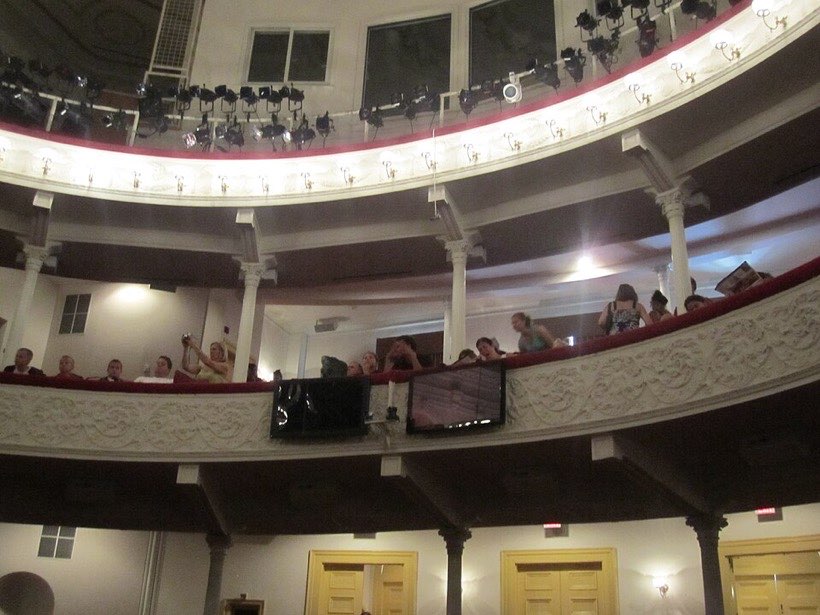
Rows of seats in a theatre.
Exchanging twice
Ones: 4 − 6? Exchange a ten: 14 − 6 = 8. Tens: now 1 − 8? Exchange a hundred: 11 − 8 = 3. Hundreds: 4 − 2 = 2. Answer: 238.
524 − 286 = 238.
Your turn: 734 − 458 = ?
Zeros in the way
There are no tens to exchange in 403. Exchange 1 hundred for 10 tens first. Then 1 ten for 10 ones. 13 − 7 = 6, 9 − 5 = 4, 3 − 1 = 2. Answer: 246.
403 − 157: exchange across the zero.
Exchanging across a zero
- 700 − 365: there are no tens or ones in 700.
- Exchange: 700 = 6 hundreds, 9 tens, 10 ones.
- 10 − 5 = 5, 9 − 6 = 3, 6 − 3 = 3. Answer 335.
Check with addition
Use the inverse to check. Add the answer to the number you took away. You should get the number you started with.
238 + 286 = 524 ✓
Did you know? Some people prefer counting up for subtractions with zeros – both methods work.
Four-digit numbers
The column method works for 4-digit numbers too. Line up thousands, hundreds, tens and ones. Check: 7003 − 2378 = 4625 ✓
4625 + 2378 = 7003.
Worked example
- Ones: 5 + 8 = 13. Write 3, carry 1.
- Tens: 2 + 7 + 1 = 10. Write 0, carry 1.
- Hundreds: 6 + 3 + 1 = 10. Write 0, carry 1. Thousands: 4 + 2 + 1 = 7. Answer 7003.
Key words
- column subtraction
- Subtracting in place-value columns.
Meet the mathematician: Al-Khwarizmi
about 780–850 · Baghdad (now Iraq)
Al-Khwarizmi worked in the House of Wisdom, a great library in Baghdad. He wrote a book that explained how to calculate with the Indian numerals 0 to 9. His name, said in Latin, became the word “algorithm” – a step-by-step method. Column subtraction is an algorithm too!
Activity: Exchange with blocks
You need: base-ten blocks
- Make 432 with blocks.
- Take away 158. When you cannot, exchange a block for 10 smaller ones.
- Record each step in columns.
- Check by adding.
Think and talk
- Why do we need to exchange?
- What is tricky about 403 − 157?
- Why does adding check a subtraction?
What I learnt
- I can subtract 3-digit numbers in columns.
- I can exchange across a zero.
- I can check with addition.