Grade 1 · Unit 1: Number and place value
Partitioning
Split numbers into parts to make adding easier.
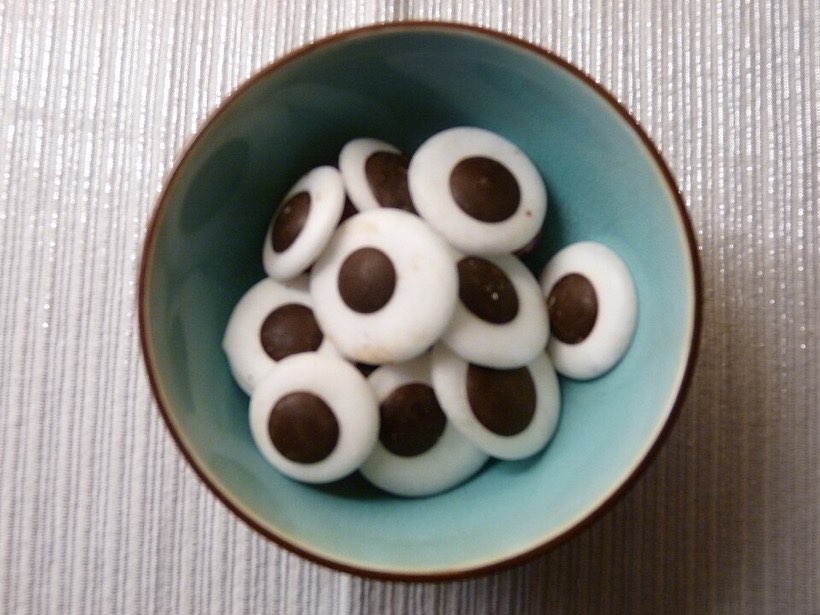
Splitting into groups
10 sweets can be split into two bowls. Maybe 6 in one bowl and 4 in the other. The two parts make the whole.
Sweets sorted into two bowls: two parts make the whole.
Number bonds
A number bond shows a whole and its two parts. 6 + 4 = 10, and 10 − 4 = 6. Bonds to 10 are very useful: 1 + 9, 2 + 8, 3 + 7, 4 + 6, 5 + 5.
6 and 4 make 10.
Tens and ones parts
We can partition 35 into tens and ones. 35 = 30 + 5. This helps when we add bigger numbers.
35 = 30 + 5
Adding by partitioning
24 + 5: split 24 into 20 and 4. Add the ones first: 4 + 5 = 9. Then 20 + 9 = 29.
Split 24 into 20 and 4, then add the ones.
Did you know? There are 6 different ways to split 10 into two parts if 0 and 10 count as parts too: 0+10, 1+9, 2+8, 3+7, 4+6 and 5+5.
Key words
- partition
- Split a number into parts.
- part
- A piece of a whole number.
- whole
- The number made when the parts are put together.
- number bond
- Two parts that make a whole, like 6 and 4 make 10.
Activity: Shake and spill
You need: 10 two-coloured counters (or 10 coins), a cup, paper
- Put 10 counters in the cup and shake.
- Spill them out. Count each colour.
- Write the number bond, e.g. 7 + 3 = 10.
- Repeat 6 times. Did you find all the bonds to 10?
Think and talk
- How many ways can you split 8 into two parts?
- Which number bonds to 10 do you know by heart?
- How does splitting 35 into 30 and 5 help?
What I learnt
- I can split a number into two parts.
- I know my number bonds to 10.
- I can partition a 2-digit number into tens and ones.