Grade 1 · Unit 1: Number and place value
Estimating and rounding
A good guess is a clever start.
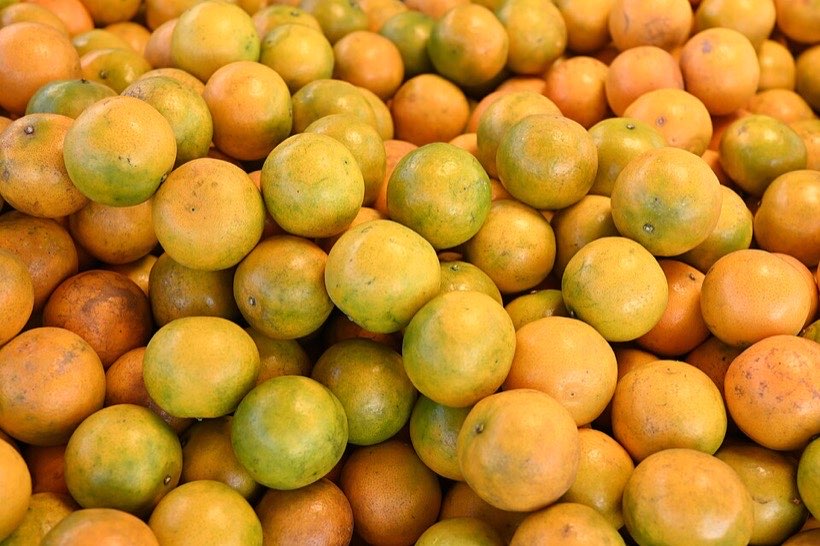
How many oranges?
The seller has a big pile of oranges. Counting them all would take a long time. We can estimate: make a sensible guess.
A big pile of oranges at a fruit stall.
See it without counting
Look at this ten frame for a moment. You can see 7 without counting one by one: a full row of 5 and 2 more. Dice dots work the same way.
5 in the top row and 2 more make 7.
Estimate, then count
First look and say: about 10? about 20? Then count to check. There are 18. “About 20” was a good estimate.
Is it about 10, about 20 or about 50?
Your turn: A box has 9 pencils. Is “about 10” or “about 50” a better estimate?
Rounding to the nearest ten
Where is 27 on the number line? It is closer to 30 than to 20. So 27 rounds to 30. A 5 in the ones place rounds up.
27 is nearer to 30 than to 20.
Worked example
- Look at the ones digit of 43: it is 3.
- 3 is less than 5, so round down.
- 43 rounds to 40.
Still the same number
Spread out 5 apples. Are there more now? No! There are still 5. Check your answers: is your answer about right?
Spreading things out does not change how many there are.
Key words
- about
- Close to, but not exactly.
Activity: Estimation jar
You need: a clear jar, beans or marbles, paper
- Fill the jar with some beans.
- Everyone writes an estimate.
- Count the beans in groups of ten.
- Whose estimate was closest?
Think and talk
- When is an estimate good enough? When do we need to count exactly?
- How many children are in the school hall? Estimate!
- Why does 25 round up to 30?
What I learnt
- I can estimate how many things there are.
- I can see small numbers without counting.
- I can round numbers to the nearest ten.