Grade 1 · Unit 1: Number and place value
2-digit numbers
Big numbers are made of tens and ones.
Counting in tens
Counting lots of things one by one is slow. It is quicker to make groups of ten. Then we count the tens and the ones left over.
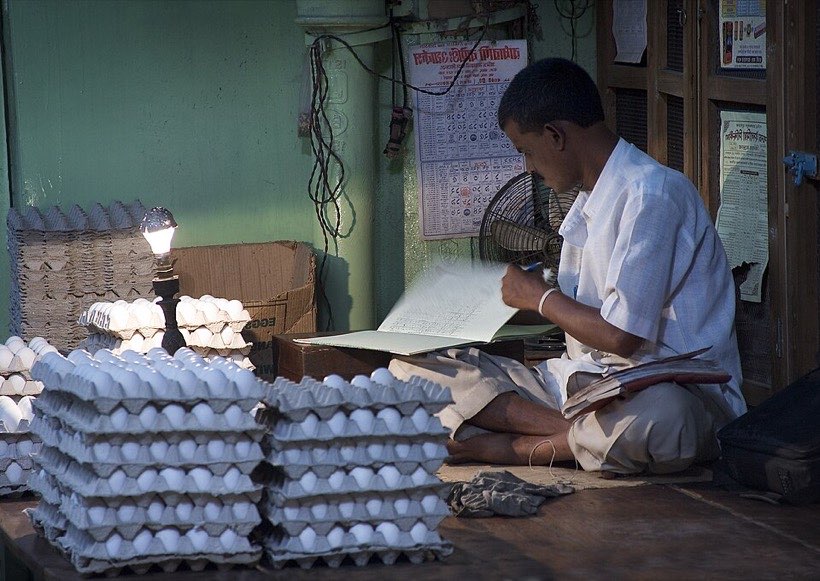
Eggs often come in trays. Counting in groups is quicker than counting one by one.
Tens and ones
A long stick is one ten. A small cube is one. Here there are 3 tens and 4 ones. 3 tens and 4 ones make thirty-four, 34.
3 tens and 4 ones make 34.
When you have 10 ones, you can swap them for 1 ten. That is how our numbers work.
Each digit has a place
34 has two digits: 3 and 4. The 3 is in the tens place, so it means 30. The 4 is in the ones place, so it means 4. This is place value.
In 34, the 3 means 3 tens and the 4 means 4 ones.
Same digits, different numbers
43 and 34 use the same digits. But 43 is bigger, because it has 4 tens. The place of a digit changes its value.
43 and 34 use the same digits but are different numbers.
Did you know? All our numbers are made from just ten digits: 0 to 9.
Key words
- tens
- Groups of ten things.
- ones
- Single things left over that do not make a ten.
- digit
- One of the symbols 0, 1, 2, 3, 4, 5, 6, 7, 8 or 9.
Activity: Bundle it!
You need: about 50 sticks, straws or pencils, rubber bands, number cards 0–9
- Grab a handful of sticks. Guess how many you have.
- Make bundles of ten with rubber bands.
- Count the bundles (tens) and the loose sticks (ones).
- Write the number with digit cards: tens first, then ones.
- Was your guess close?
Think and talk
- How would you count 50 sticks quickly?
- Which is bigger, 61 or 16? How do you know?
- Where do you see 2-digit numbers at home or in the market?
What I learnt
- I can make a 2-digit number with tens and ones.
- I know that the tens digit and the ones digit have different values.