Grade 5 · Unit 2: The life cycle of flowering plants
Pollination
Moving pollen from anther to stigma.
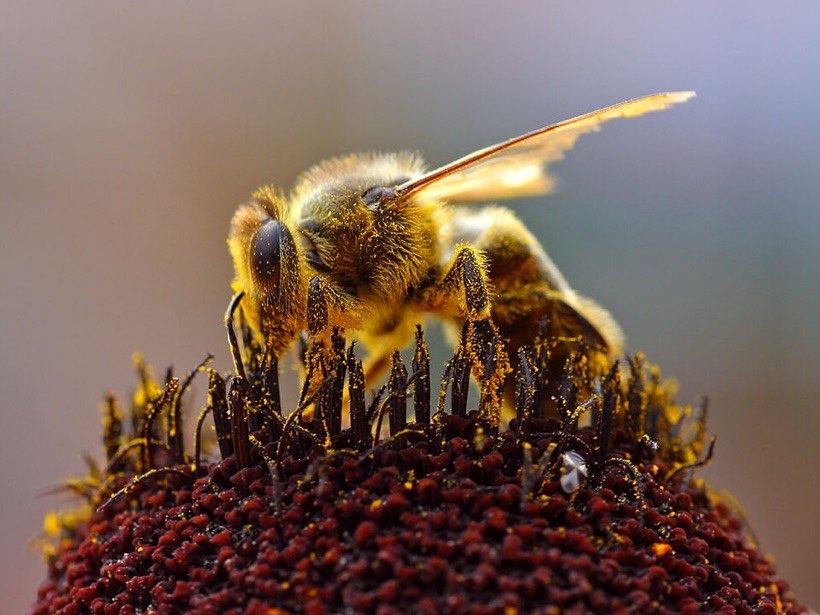
What is pollination?
To make seeds, pollen must move from an anther to a stigma. This is called pollination. Usually, pollen goes from one flower to another flower of the same kind.
When pollen moves to a flower on a different plant of the same kind, it is called cross-pollination. This makes stronger, more varied seeds.
Insect pollinators
Bees, butterflies and moths visit flowers to drink nectar. Pollen sticks to their hairy bodies. At the next flower, some pollen rubs off onto the stigma. They are pollinators.
Some birds, such as sunbirds, and some bats are pollinators too. They visit flowers for nectar and carry pollen on their heads.
Wind pollination
Wind-pollinated flowers, like rice, maize and grasses, make huge amounts of light pollen. Their anthers hang out so the wind can blow the pollen away. Their feathery stigmas catch pollen from the air.
Hay fever happens when people breathe in lots of wind-blown pollen from grasses and trees.
After pollination
After pollination, the pollen grows a tiny tube down to the ovary. It joins with an ovule. This is fertilisation. The fertilised ovule grows into a seed.
Without fertilisation, the flower simply withers and falls off without making fruit.
What I learnt
- I know that pollination is moving pollen from an anther to a stigma.
- I can describe insect and wind pollination.