Grade 5 · Unit 2: The life cycle of flowering plants
The parts of a flower
Petals, stamens and carpels – each part has a job.
Looking inside a flower
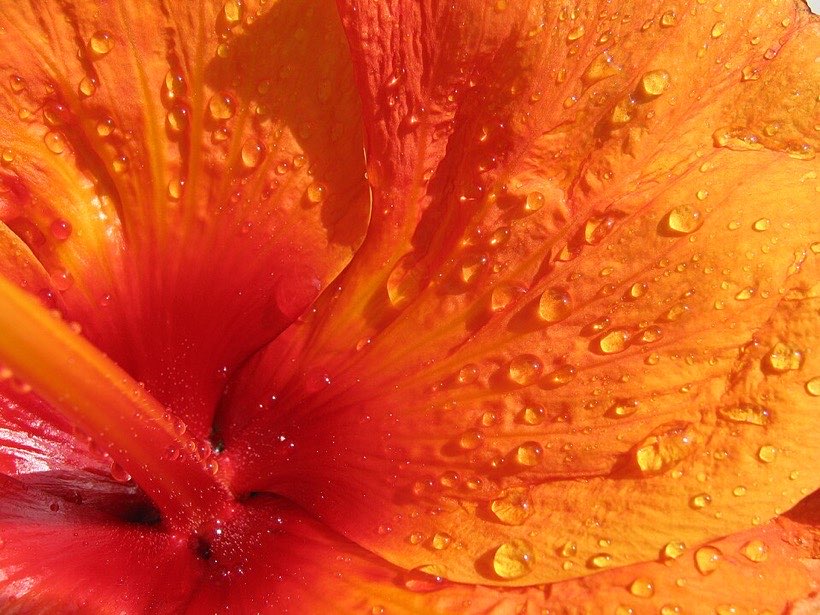
A flower has several parts. Each one has a job. The petals are often brightly coloured to attract insects. The sepals are small green leaves that protected the flower when it was a bud.
Botanists often cut a flower in half from top to bottom to see all its parts at once.
The male parts
The stamens are the male parts of the flower. Each stamen has a thin stalk (the filament) and an anther at the top. The anther makes pollen – a yellow, dusty powder.
Each grain of pollen is tiny, but it has a pattern on its surface that is different for every kind of plant.
The female parts
The carpel is the female part, in the middle of the flower. At the top is the sticky stigma, which catches pollen. The style joins it to the ovary. The ovary contains ovules, which can become seeds.
Some flowers have stigmas shaped like feathers or brushes, which are very good at catching pollen from the air.
From flower to fruit
After pollination, the ovules grow into seeds. The ovary swells and becomes the fruit around the seeds. The petals and stamens wither and fall off.
The seeds inside a fruit are the fertilised ovules. A watermelon can have hundreds because its ovary contained hundreds of ovules.
What I learnt
- I can name the parts of a flower and describe their jobs.
- I know which parts are male and which are female.