Grade 5 · Unit 2: The life cycle of flowering plants
Other ways seeds are spread
Seeds hitch rides on animals, float on water – or explode!
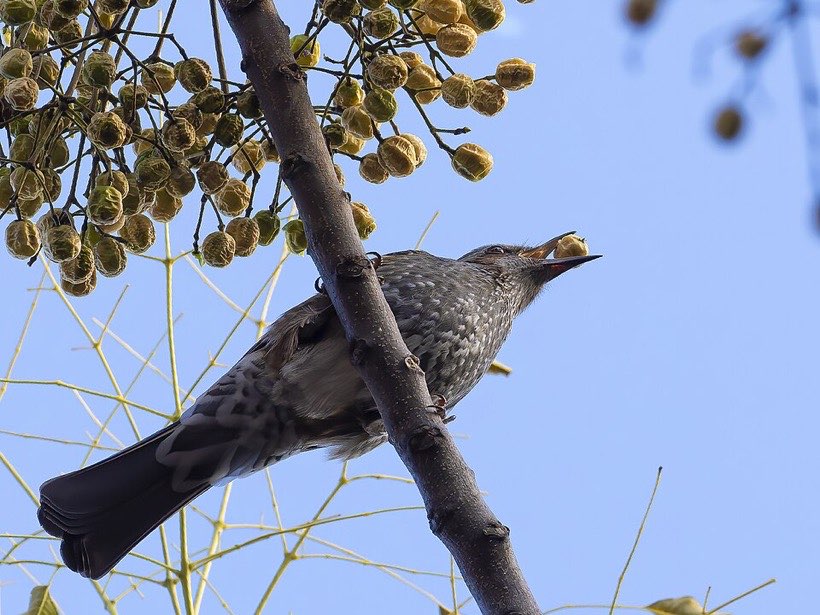
Eaten by animals
Juicy fruits are tasty for animals. Birds, bats and monkeys eat the fruits and the seeds pass through their bodies. The seeds come out in their droppings, far from the parent plant. This is animal dispersal.
Banyan and fig seeds are spread by birds. That is why banyan trees sometimes grow on old walls and buildings!
Hitching a ride
Some seeds have hooks that catch on animals’ fur or people’s clothes. Later they fall off or are brushed off somewhere new. Walk through long grass and you may find seeds stuck to your socks!
An engineer once noticed burrs sticking to his dog’s fur. Studying their tiny hooks gave him the idea for Velcro.
Floating away
Some seeds are spread by water. This is water dispersal. A coconut has a hard, waterproof shell and air inside, so it floats. Lotus seeds float in ponds before sinking to grow.
Coconuts can float for months and still grow. That is why coconut palms grow on so many tropical islands and beaches.
Pop!
Some seed pods dry out and burst open. This is explosive dispersal. Pea and bean pods twist and fling their seeds away. Balsam (dopati) pods pop when touched!
Dry seed pods twist because the two sides dry out at different speeds. When they snap apart, the seeds are flung away.
What I learnt
- I can describe how seeds are spread by animals, water and explosion.
- I can link a seed’s features to how it is spread.