Light reflects off different surfaces
Shiny and smooth reflect well; dull and rough do not.
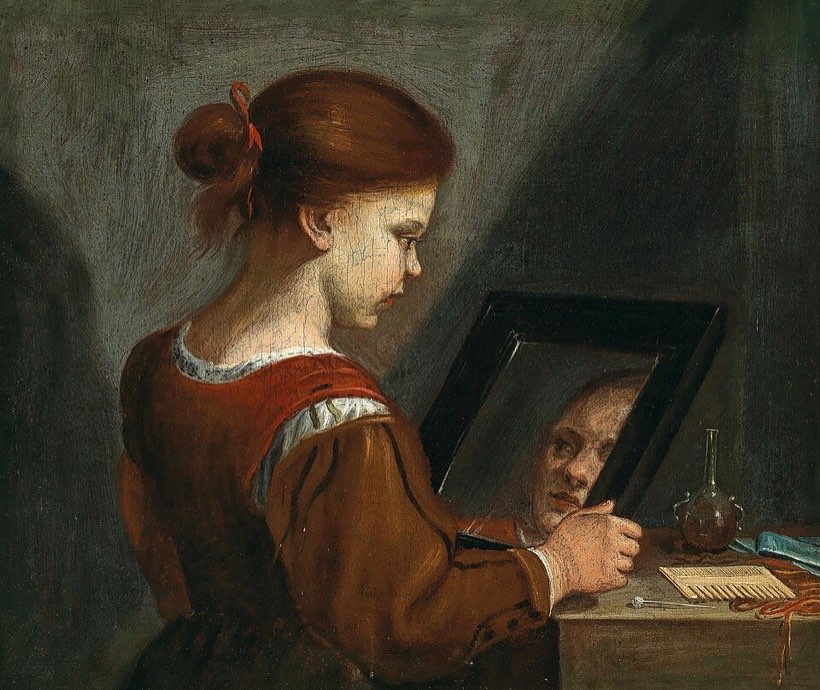
Seeing your face
Light shines on your face. Light from your face travels to the mirror. The mirror reflects it back into your eyes, and you see your reflection. A mirror works because it is very smooth and shiny.
Glass mirrors have a thin layer of shiny metal, such as silver or aluminium, on the back.
Different surfaces
Smooth, shiny surfaces such as mirrors, foil and polished metal reflect clear images. Rough or dull surfaces such as wood, cloth and paper scatter the light, so you see no image. But all surfaces reflect some light – otherwise we could not see them.
You can see a reflection in a shiny steel bowl or a polished car, but the image is curved because the surface is curved.
Before mirrors
Long ago, people looked at their reflections in still water. Later they used polished bronze or silver. Glass mirrors with a thin metal coating came much later.
Ancient people in Egypt, China and the Indus valley made mirrors from polished copper and bronze thousands of years ago.
Rear-view mirrors
Drivers use mirrors to see what is behind them. Light from the car behind reflects off the mirror into the driver’s eyes.
Big buses and lorries have several mirrors because the driver sits high up and cannot see close to the sides.
What I learnt
- I know that smooth, shiny surfaces reflect light well.
- I can explain how mirrors work.