Grade 4 · Unit 3: Solids, liquids and gases
Melting and boiling points
Every substance has its own melting and boiling temperatures.
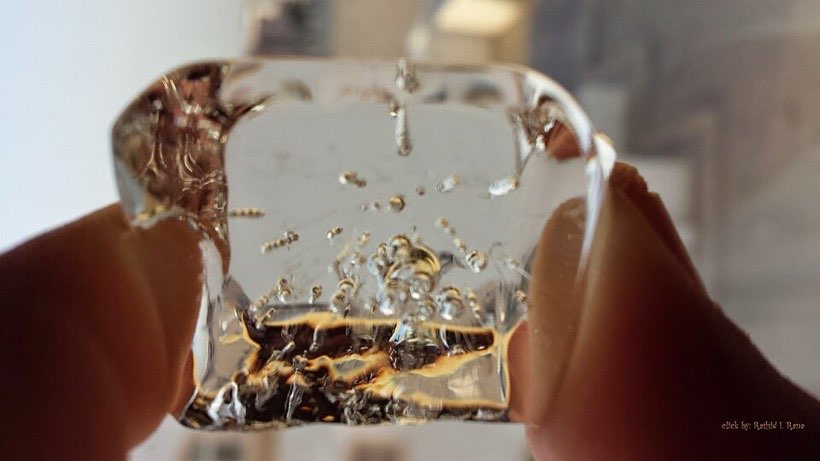
Melting point
The melting point is the temperature at which a solid melts. Ice melts at 0 degrees Celsius. Chocolate melts at about 34 °C – just below body temperature.
Pure water freezes at exactly 0 °C. Salty water freezes at a lower temperature, which is why the sea is harder to freeze than a lake.
Boiling point
The boiling point is the temperature at which a liquid boils. Water boils at 100 °C at sea level. Different liquids have different boiling points.
High up a mountain, water boils below 100 °C because there is less air pressing down on it. Rice takes longer to cook there.
Reading a table
Scientists record melting and boiling points as data in tables. You can use the table to predict whether a substance is solid, liquid or gas at a certain temperature. If the room is hotter than the melting point, the substance will be a liquid.
For example, wax melts at about 60 °C. In a room at 30 °C, wax is solid. In a pan at 80 °C, it is liquid.
Metals and rocks
Metals and rocks have very high melting points. Volcanoes pour out lava – rock so hot that it has melted. Factories melt metal to pour it into moulds.
Gold melts at about 1,064 °C. Jewellers melt it in small furnaces to pour into moulds for rings and bangles.
What I learnt
- I know that substances have their own melting and boiling points.
- I can use data in a table to predict the state of a substance.