Grade 4 · Unit 3: Solids, liquids and gases
Chemical reactions
Some changes make brand-new substances.
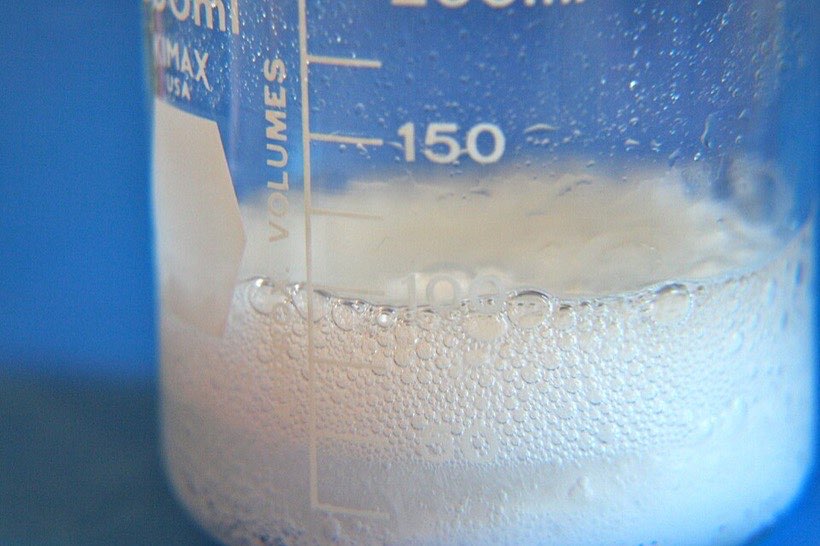
New substances
In a chemical reaction, substances change into new substances. Mix bicarbonate of soda and vinegar: it fizzes as a new gas, carbon dioxide, is made. Signs of a chemical reaction include bubbles, a colour change, heat, light or a smell.
When a candle burns, wax reacts with oxygen to make new substances: carbon dioxide and water vapour. You cannot turn them back into wax.
Reversible or irreversible?
Melting butter or freezing water are not chemical reactions. No new substance is made, and they can be reversed. Most chemical reactions are irreversible: you cannot get the starting substances back. Cooking an egg, baking bread and burning wood are chemical reactions.
A good test: can you get the starting substance back easily? Melted chocolate sets again – no reaction. Burnt toast cannot become bread – a reaction.
Rusting
Iron reacts with water and oxygen from the air to make rust. Rust is brown and flaky and makes iron weak. Paint, oil and a coating of zinc keep water and air away, so iron does not rust.
In an investigation, iron nails were kept in different test tubes. The nail in water with air rusted most. A nail in dry air, or in water with no air, did not rust. This shows rust needs both water and air.
Useful reactions
Cement mixed with water reacts and sets into hard concrete for buildings. Sand, limestone and soda ash are heated together to make glass. Cooking gas burns in air to give us heat.
Plants carry out a chemical reaction every day: photosynthesis turns water and carbon dioxide into sugar and oxygen using light energy.
What I learnt
- I know that chemical reactions make new substances and are usually irreversible.
- I know that rusting needs water and air.