Grade 4 · Unit 1: Humans and animals
Why do we need a skeleton?
Support, protection and movement.
Support
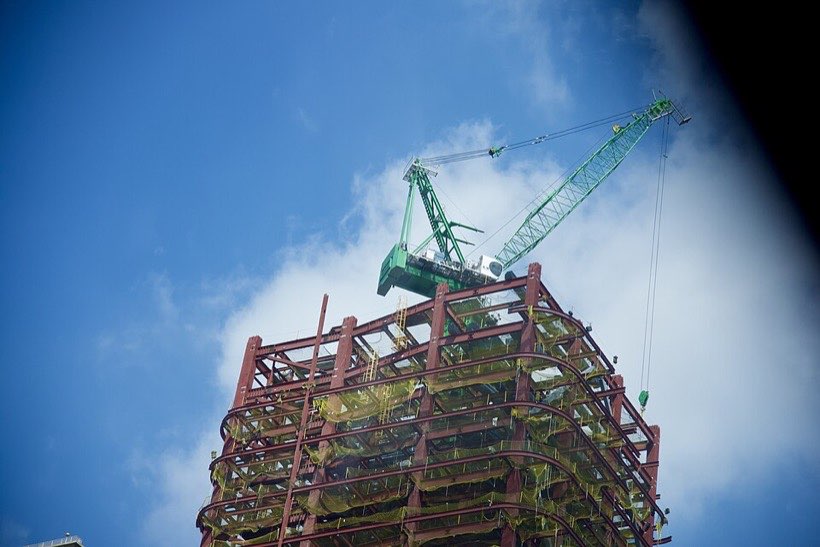
Your skeleton supports your body. It holds you up and gives you your shape. Without a skeleton, you would flop on the ground like a heap of jelly. A building has a steel or concrete frame for the same reason.
A tent has poles to hold it up and a building has steel or concrete pillars. In the same way, your skeleton holds up your muscles, skin and organs.
Protection
Some bones protect soft, important organs. The skull protects the brain. The ribs protect the heart and lungs. Your spine protects the nerves that run down your back.
Even with a strong skull, it is wise to wear a helmet when you ride a bicycle or motorbike. A helmet adds extra protection.
Movement
Bones and muscles work together to move your body. Muscles are attached to bones. When muscles pull, the bones move. You will find out more about this in the next lesson.
A footballer kicking a ball uses the hip, knee and ankle joints and dozens of muscles, all working together in less than a second.
Animals without bones
Some animals have no bones at all. They are invertebrates. Jellyfish float in water, which supports their soft bodies. Earthworms keep their shape by filling their bodies with fluid.
Insects, crabs and snails have a hard covering on the outside instead of bones inside. This outside skeleton is called an exoskeleton.
What I learnt
- I can explain the three main jobs of a skeleton: support, protection and movement.
- I know that some animals have no skeleton or an outside skeleton.