Grade 4 · Unit 1: Humans and animals
The human skeleton
206 bones, from your skull to your toes.
206 bones
An adult human skeleton has 206 bones. Some bones are long, like the bones in your arms and legs. Some are flat, like the skull. Some are tiny, like the bones in your ear. More than half of your bones are in your hands and feet!
Explore the bones of the body in the Inside My Body lab.
Your hand alone has 27 bones and your foot has 26. Doctors use X-ray photographs to look at bones without cutting the skin.
Head and chest
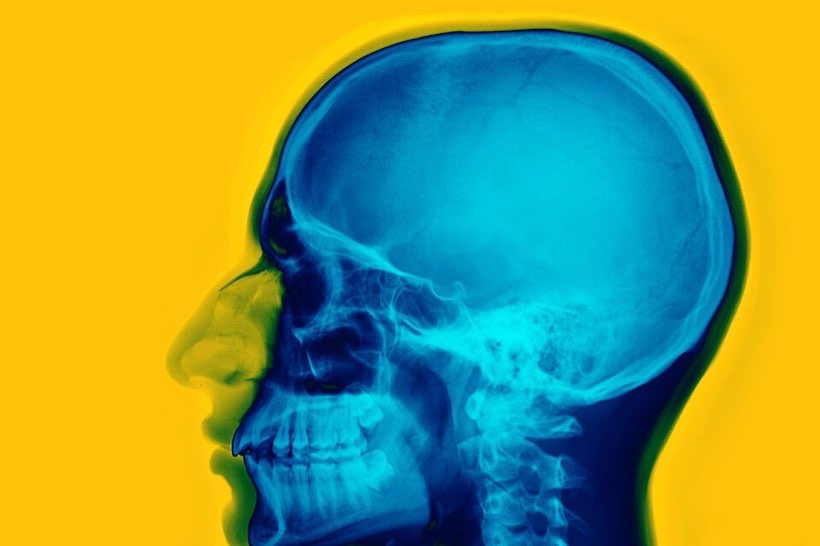
Your skull is made of bones joined tightly together. It protects your brain. Your ribs curve round your chest like a cage. The ribcage protects your heart and lungs.
An X-ray shows the skull and the bones of the neck.
The only bone in your skull that moves is your lower jaw. It moves up and down when you talk and eat.
Your backbone
Your spine is made of 33 small bones called vertebrae. Because it is made of many small bones, you can bend and twist. The spine also protects the spinal cord, which carries messages between your brain and body.
Explore the spine and the other bones in the Inside My Body lab.
Between the vertebrae are soft pads called discs. They work like cushions so the bones do not rub, and they let your back bend and twist.
Arms and legs
The pelvis (hip bones) joins your spine to your legs. The femur, or thigh bone, is the longest and strongest bone in your body. Your arms have a long upper arm bone and two bones in the lower arm.
An X-ray of a leg shows the long femur and the knee joint.
Your thigh bone is about a quarter of your height. Scientists who study old skeletons can even estimate how tall a person was from the femur alone.
Did you know? The smallest bone in your body is in your ear. It is about the size of a grain of rice.
Key words
- skull
- The bones of the head. It protects the brain.
- ribs
- Curved bones that make a cage around the chest.
- spine
- The backbone: a column of small bones down your back.
- vertebrae
- The small bones that make up the spine.
- pelvis
- The hip bones that join the spine to the legs.
- femur
- The thigh bone – the longest bone in the body.
Activity: Measure your bones
You need: a tape measure, a partner, a table to record results
- Measure the length of your partner’s upper arm (shoulder to elbow) and thigh (hip to knee).
- Measure their height too.
- Collect results from your group.
- Do taller people have longer thigh bones? Look for a pattern.
Think and talk
- Why do you think the skull is made of hard, flat bones?
- Why is the spine made of many small bones instead of one long bone?
- Which bones protect your heart?
What I learnt
- I can name and find the skull, ribs, spine, pelvis and femur.
- I know which bones protect important organs.