Grade 5 · Unit 2: Fractions, decimals and percentages
Multiplying and dividing fractions
Half of a half, and how many quarters fit.
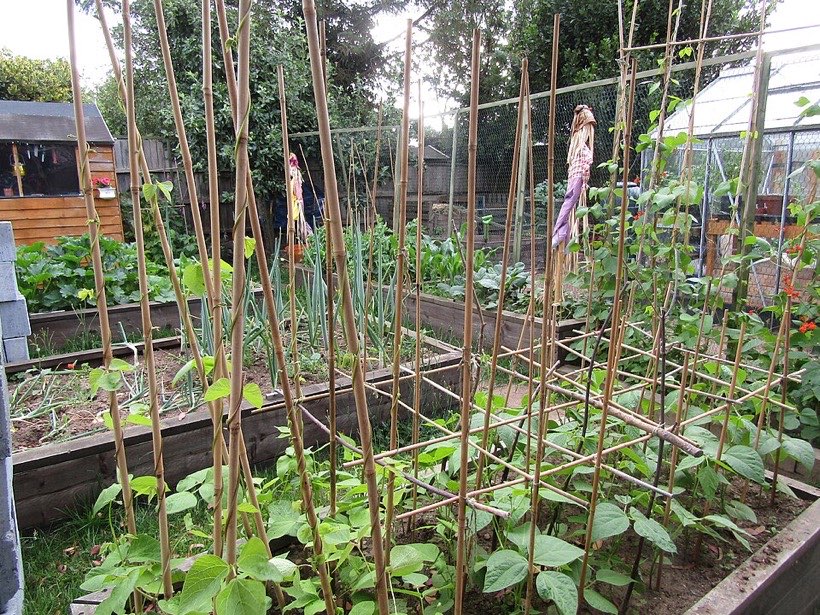
Story time: The garden plot
A farmer gave his daughter ½ of his garden to grow vegetables. She planted spinach on ¾ of her part. “What fraction of the whole garden is spinach?” asked her father. She drew it: ¾ of ½ is 3/8. “Three eighths of your garden!”
Parts of parts
A part of a part is a multiplication. ¾ of ½ means ¾ × ½. Drawings help us see the answer.
Vegetable plots are often parts of a bigger garden.
Multiplying fractions
Multiply the tops: 3 × 1 = 3. Multiply the bottoms: 4 × 2 = 8. ¾ × ½ = 3/8. Of means multiply.
¾ of ½ = 3/8
Worked example
- ⅔ × 4/5: tops 2 × 4 = 8.
- Bottoms 3 × 5 = 15.
- Answer 8/15.
Mixed numbers
Change 2½ to an improper fraction: 5/2. 5/2 × 3 = 15/2. Change back: 15/2 = 7½.
Change mixed numbers to improper fractions first.
Dividing by a fraction
3 ÷ ¼ asks: how many quarters fit into 3? 12. Shortcut: dividing by a fraction is multiplying by its reciprocal: 3 × 4/1 = 12. ¾ ÷ ½ = ¾ × 2/1 = 6/4 = 1½.
3 ÷ ¼ = 12: there are 12 quarters in 3.
Your turn: 2 ÷ ⅓ = ?
Order of operations with fractions
Multiply before adding: ½ + ¼ × 2 = ½ + ½ = 1. With brackets: (½ + ¼) × 2 = ¾ × 2 = 1½. Simplify each answer to its simplest form.
Brackets change the answer.
Key words
- reciprocal
- A fraction flipped over: the reciprocal of ⅔ is 3/2.
- of
- In fractions, “of” means multiply.
Meet the mathematician: Brahmagupta
598–668 · Bhinmal, India
Brahmagupta wrote rules for calculating with fractions, zero and negative numbers. He explained how to multiply fractions: multiply the tops and multiply the bottoms. He called positive numbers “fortunes” and negative numbers “debts”. His book Brahmasphutasiddhanta was written in the year 628.
Activity: Paper folding proof
You need: paper squares, colours
- Fold a square in half; colour ½.
- Fold the coloured half into quarters; shade ¾ of it.
- Unfold. What fraction of the whole is shaded twice? (3/8)
- Try ⅔ × ½.
Think and talk
- Why does multiplying by ½ make a number smaller?
- Why does dividing by ½ make a number bigger?
- How do brackets change a calculation?
What I learnt
- I can multiply fractions and mixed numbers.
- I can divide by fractions.
- I can use the order of operations with fractions.