Grade 5 · Unit 2: Fractions, decimals and percentages
Comparing and ordering fractions
Use common denominators.
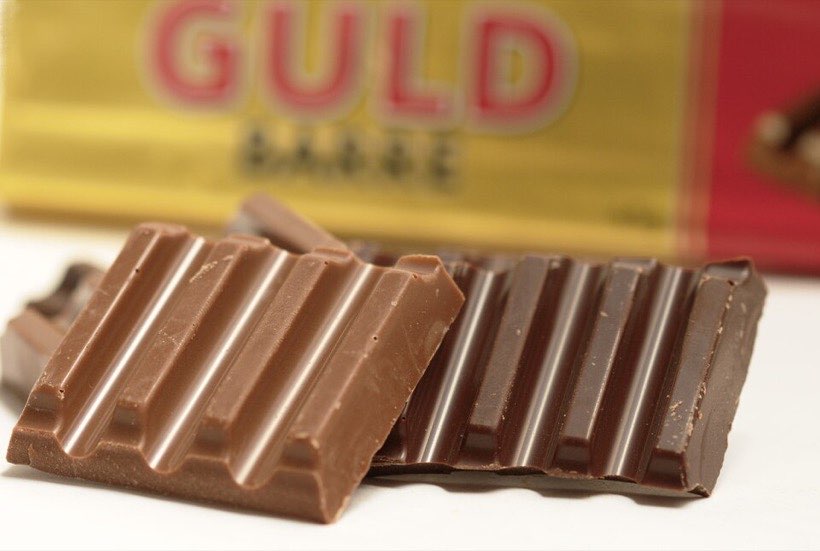
Story time: Who ate more chocolate?
Rina ate ¾ of a chocolate bar. Sami ate 5/6 of the same size bar. “I ate more – 3/4 looks bigger!” said Rina. Sami changed both to twelfths: 9/12 and 10/12. “I ate one twelfth more,” grinned Sami.
Who ate more?
Rina ate 3/4 of a chocolate bar. Sami ate 5/6 of the same size bar. Who ate more? We need a common denominator.
Chocolate bars split into pieces.
Common denominators
Find a number both 4 and 6 divide into: 12. 3/4 = 9/12 and 5/6 = 10/12. 10/12 > 9/12, so Sami ate more.
3/4 = 9/12 and 5/6 = 10/12, so 5/6 is more.
Worked example
- Compare ⅗ and ⅔.
- Common denominator 15: 9/15 and 10/15.
- 10/15 > 9/15, so ⅔ is bigger.
Benchmarks
Compare with benchmarks like 0, ½ and 1. 3/8 is less than ½ (4/8). 7/8 is close to 1.
3/8 < ½ < 7/8
Ordering
Find a common denominator: 24. Convert each fraction. Compare the numerators.
Change to the same denominator to order.
Your turn: Order 5/8, ½, ¾ from smallest.
Did you know? Fractions can also be compared by changing them to decimals: 5/8 = 0.625.
Key words
- common denominator
- The same denominator for two or more fractions.
- benchmark
- A familiar fraction like ½ used for comparing.
Meet the mathematician: John Farey
1766–1826 · Woburn, England
John Farey was a geologist who also loved numbers. In 1816 he wrote about lists of fractions in order of size between 0 and 1. These are now called Farey sequences, for example 0/1, 1/3, 1/2, 2/3, 1/1. He noticed a surprising pattern linking neighbouring fractions.
Activity: Fraction line-up
You need: fraction cards
- Each person picks a fraction card.
- Line up from smallest to largest.
- Use benchmarks and common denominators to check.
- Explain one comparison to the class.
Think and talk
- Which is bigger: 4/5 or 5/6? How do you know?
- Why is ½ a useful benchmark?
- Could you compare 2/3 and 5/8 without a common denominator?
What I learnt
- I can compare fractions using common denominators.
- I can order fractions.
- I can use benchmarks.