Grade 4 · Unit 1: Number and place value
Number properties
Odd, even, prime or square?
Story time: The secret code
Nabil and his friends made a secret club. The password had to be a prime number between 40 and 50. “41, 43, 47,” whispered Nabil. “What about 49?” asked his friend. “No – 49 is 7 × 7, so it is composite.” Real computer passwords and bank codes also use huge prime numbers to stay safe.
Number detectives
Numbers have properties, just like shapes. Some are odd, some even, some prime, some square. Knowing properties helps you calculate quickly.
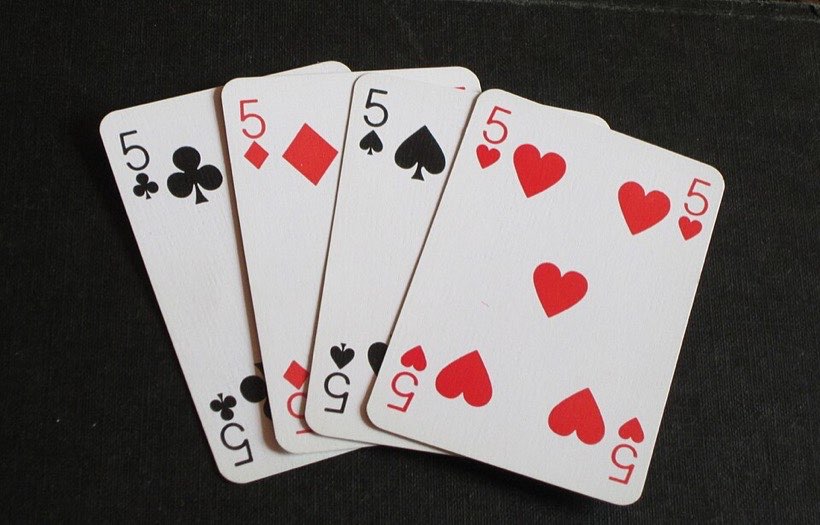
Playing cards show numbers we can sort: odd, even, prime …
Prime and composite
A prime number has exactly 2 factors: 7 = 1 × 7 only. A composite number has more: 12 = 1 × 12, 2 × 6, 3 × 4. 1 is neither prime nor composite.
The prime numbers below 50.
Your turn: Is 51 prime? (Hint: try 3.)
Square numbers
Square numbers make square arrays. 1, 4, 9, 16, 25, 36, 49, 64, 81, 100. We can write 4 × 4 as 4².
4 × 4 = 16, a square number.
Divisibility tests
Is 345 divisible by 3? 3 + 4 + 5 = 12, and 12 ÷ 3 = 4. Yes! Is 345 divisible by 5? It ends in 5. Yes. Is it divisible by 2? It ends in 5 (odd). No.
Quick tests for divisibility.
Worked example
- Is 2346 divisible by 6?
- It is even, so it divides by 2.
- Digit sum 2 + 3 + 4 + 6 = 15, which divides by 3. So it divides by 6 ✓.
Did you know? 2 is the only even prime number.
Key words
- prime number
- A number with exactly two factors: 1 and itself.
- composite number
- A number with more than two factors.
- square number
- A number made by multiplying a number by itself, like 4 × 4 = 16.
- divisible
- Can be divided with no remainder.
Meet the mathematician: Sophie Germain
1776–1831 · Paris, France
Sophie Germain taught herself maths by candlelight because girls were not allowed at university. She wrote to the great mathematician Gauss using a man’s name, “Monsieur Le Blanc”. Gauss was amazed when he later found out she was a woman. Some prime numbers are named after her: “Sophie Germain primes”.
Activity: Sieve of primes
You need: a hundred square, colours
- Cross out 1.
- Circle 2, then cross out every multiple of 2.
- Circle 3 and cross out its multiples. Then 5 and 7.
- The circled numbers are the primes to 100.
Think and talk
- Why is 2 the only even prime?
- Is 51 prime? Use a divisibility test.
- Which numbers are both square and odd?
What I learnt
- I can identify prime and composite numbers.
- I know square numbers to 100.
- I can use divisibility tests.