Grade 4 · Unit 1: Number and place value
Large numbers and lakh
How do we read 1,00,000 and 100 000?
Story time: The census taker
Every ten years, Bangladesh counts all its people. This is called a census. Rupa’s aunt worked on the census in their upazila. She counted 2,45,318 people. “Two lakh, forty-five thousand, three hundred and eighteen,” Rupa read slowly. “Or 245 thousand, 318 in the international way,” said her aunt. “Same number, two ways to say it!”
Counting people
Bangladesh has about 17 crore people. Big numbers like this need more places. Today we read numbers to 100 000 and learn lakh and crore.
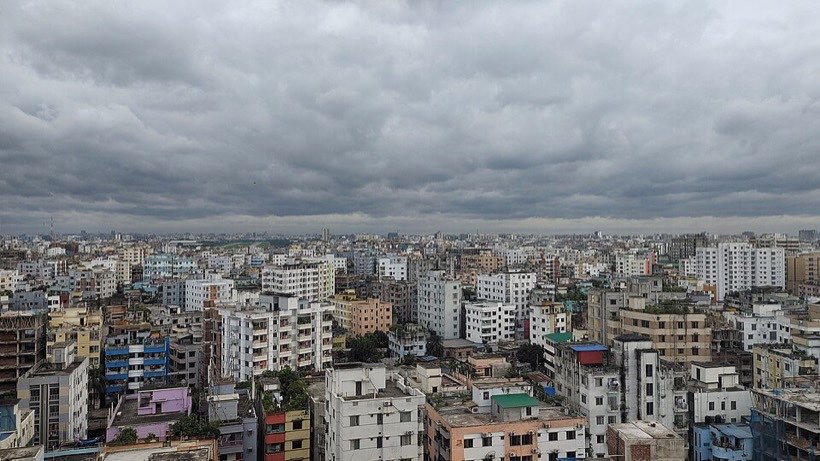
Dhaka is one of the most crowded cities in the world.
Ten thousands
Each place is 10 times the place to its right. The 4 in 47 285 is worth 40 000. Read it: forty-seven thousand, two hundred and eighty-five.
47 285: 4 ten thousands, 7 thousands, 2 hundreds, 8 tens, 5 ones.
Two ways to write big numbers
Internationally, digits are grouped in threes: 250 000. In Bangladesh, after the thousands, digits are grouped in twos: 2,50,000. Both show the same number.
In Bangladesh we often group digits as lakh and crore.
Worked example
- Write 3,72,05,400 in the international way.
- Group the digits in threes from the right: 37 205 400.
- Say it: thirty-seven million, two hundred and five thousand, four hundred.
Comparing and rounding
To compare, start with the biggest place. To round to the nearest 1000, look at the hundreds digit. 47 285 → 47 000. To the nearest 10 000 → 50 000.
47 285 rounds to 47 000 (nearest 1000) and 50 000 (nearest 10 000).
Your turn: Round 2,45,318 to the nearest thousand.
Did you know? The word “lakh” comes from Sanskrit and has been used in South Asia for more than 1000 years.
Millions
A million is 1 000 000 – ten lakh. 3 450 000 has seven digits. International: 3 million 450 thousand. South Asian: 34 lakh 50 thousand. Dhaka has more than 1 crore people – over 10 million.
3 450 000 = 34,50,000: three million four hundred and fifty thousand, or 34 lakh 50 thousand.
Roman numerals
The Romans used letters for numbers: I = 1, V = 5, X = 10, L = 50. Add when a smaller letter comes after: VI = 6, XV = 15. Subtract when it comes before: IV = 4, IX = 9, XL = 40.
Roman numerals are still used on clocks and in book chapters.
Your turn: Write 38 in Roman numerals.
Key words
- ten thousands
- The place worth 10 000.
- hundred thousand
- 100 000 – in Bangladesh this is one lakh.
- lakh
- 1,00,000 in the South Asian system (one hundred thousand).
- crore
- 1,00,00,000 – ten million.
Meet the mathematician: Archimedes
about 287–212 BCE · Syracuse, Sicily
Archimedes wondered: how many grains of sand would it take to fill the whole universe? The Greek numbers of his time stopped at 10 000, so he invented a way to name much bigger numbers. He wrote about it in a book called “The Sand Reckoner”. It showed that even unimaginably large amounts can be counted with clever place value.
Activity: Population ladder
You need: cards with district populations (e.g. 5,00,000 to 1,20,00,000)
- Read each population aloud in lakh and in thousands.
- Order them from smallest to largest.
- Round each to the nearest lakh.
- Which district is about twice another?
Think and talk
- Write 1 lakh in figures two ways.
- Why do you think there are two systems?
- Round the number of learners in our school to the nearest 100.
What I learnt
- I can read and write numbers to 100 000.
- I can use lakh and crore.
- I can compare and round large numbers.