Grade 3 · Unit 8: Location and transformation
Symmetry
Fold it – do the halves match?
Story time: The alpana for Pohela Boishakh
For Pohela Boishakh, Joy and his friends paint an alpana on the school yard. Joy paints flowers on the left side. “Make the right side a mirror image,” says the art teacher. When they finish, the pattern looks the same on both sides of the line.
Symmetry in nature
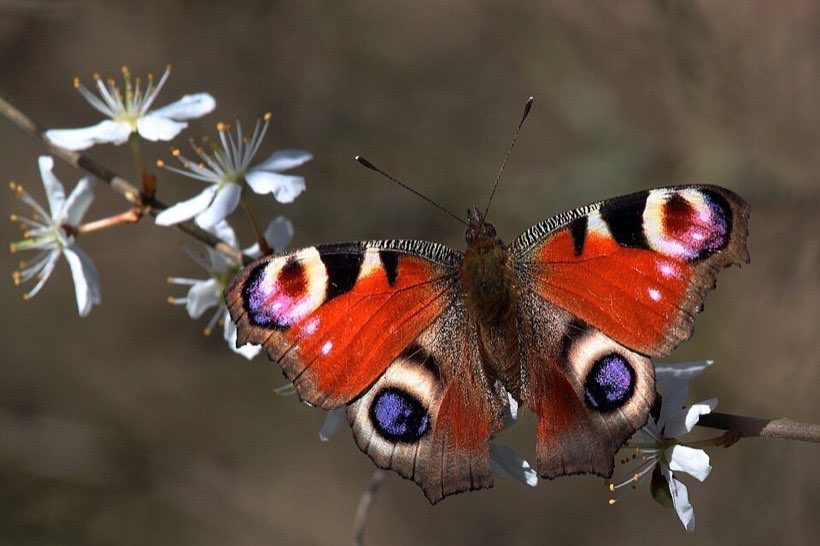
A butterfly’s wings match on both sides. It is symmetrical. Leaves, flowers and faces are nearly symmetrical too.
A butterfly’s wings are mirror images.
Lines of symmetry
A line of symmetry splits a shape into matching halves. Some shapes have many lines. A circle has an endless number!
This star has 5 lines of symmetry.
Your turn: How many lines of symmetry does a rectangle have?
Completing a reflection
Each point is the same distance from the mirror line on both sides. Count squares to the line, then count the same on the other side. The reflection faces the opposite way.
Complete the other half of the leaf.
Worked example
- A corner of a shape is 3 squares left of the mirror line.
- Its reflection is 3 squares right of the line.
- Do this for every corner, then join them.
Symmetry in regular shapes
A square has 4 lines of symmetry. A regular hexagon has 6. A rectangle that is not a square has only 2.
A regular shape has as many lines as sides.
Did you know? Alpana floor art for Pohela Boishakh is often symmetrical.
Diagonal lines and tiles
A square has 4 lines of symmetry: 2 straight and 2 diagonal. Some shapes look the same when turned – rotational symmetry. Floor tiles and jali screens use symmetry and tessellation.
Lines of symmetry can be diagonal too.
Key words
- line of symmetry
- A line that splits a shape into two mirror-image halves.
- symmetrical
- Having at least one line of symmetry.
Meet the mathematician: Emmy Noether
1882–1935 · Erlangen, Germany
Emmy Noether was one of the most important mathematicians of the 20th century. At first she was not allowed to teach at university because she was a woman, but she taught anyway. She discovered a deep link between symmetry and the laws of nature. Scientists still use “Noether’s theorem” today.
Activity: Alpana design
You need: squared paper, a mirror, colours
- Draw a line down the middle of the paper.
- Draw a design on one side.
- Reflect it on the other side, square by square.
- Check with a mirror.
Think and talk
- How many lines of symmetry does a rectangle have? Check by folding.
- Find a letter with 2 lines of symmetry.
- Why do you think many logos are symmetrical?
What I learnt
- I can find lines of symmetry.
- I can complete a symmetrical shape.