Grade 3 · Unit 5: Using units of measurement
Area and perimeter problems
Same area, different fence!
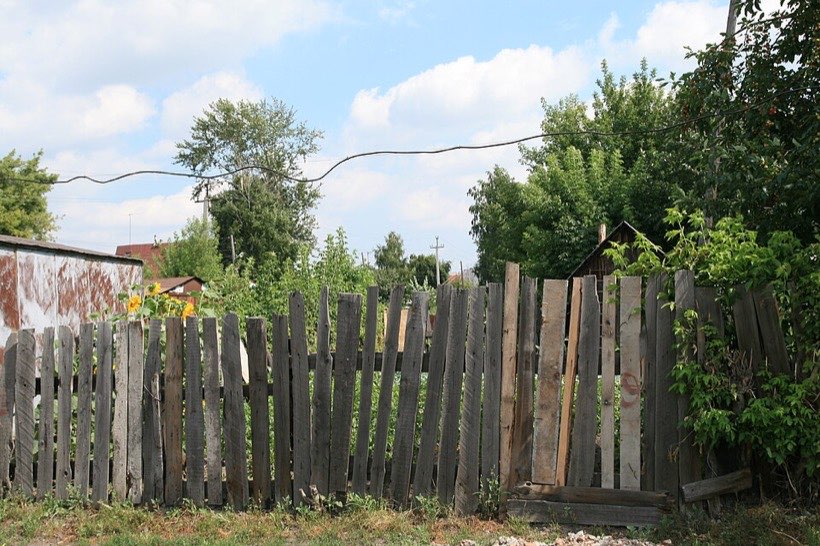
Story time: Farmer Karim’s goat pen
Farmer Karim wants a pen for his goats with 12 square metres of grass. He can make it 3 m by 4 m, or 2 m by 6 m, or 1 m by 12 m. “They all have the same grass,” says Karim, “but which needs the least fence?” His daughter Nila works it out: 3 by 4 needs only 14 m of fence!
Fencing a garden
A garden needs a fence all the way round: that is the perimeter. It needs soil inside: that is the area. Two different measurements!
Gardens need a fence around and soil inside.
Same area, different perimeter
All three pens have the same area: 12 square metres. But the perimeters are different. The squarer the pen, the less fence it needs.
All three pens have 12 square metres of grass.
Irregular shapes
A pond or a leaf is not a rectangle. Count the whole squares, then join half squares into wholes. This gives a good estimate of the area.
Count whole squares; two half squares make one.
Worked example
- Count the whole squares: 16.
- Count the half squares around the edge: 4, which make 2 wholes.
- Estimated area: 16 + 2 = 18 squares.
Measure real things
Measure a book: 21 cm by 15 cm (model). Area = 21 × 15 = 315 square centimetres. Perimeter = 21 + 15 + 21 + 15 = 72 cm.
Measure the sides first.
Your turn: A table top is 2 m by 1 m. What is its area and perimeter?
Meet the mathematician: Heron of Alexandria
about 10–70 CE · Alexandria, Egypt
Heron was an engineer and teacher in Alexandria. He wrote a book called “Metrica” about measuring land, shapes and solids. He found clever ways to work out the area of a triangle from its sides. He also built early machines, like a toy powered by steam!
Activity: Pen designer
You need: squared paper, 12 tiles
- Make every rectangle you can with 12 tiles.
- Find each perimeter.
- Which uses the least fence? The most?
- Draw round your hand and estimate its area.
Think and talk
- Why might a farmer want less fence?
- How can you estimate the area of your hand?
- Can two shapes have the same perimeter but different areas?
What I learnt
- I know shapes with the same area can have different perimeters.
- I can estimate the area of irregular shapes.
- I can measure area and perimeter of real objects.