Grade 3 · Unit 5: Using units of measurement
Time to the minute
Read clocks to the minute and use timetables.
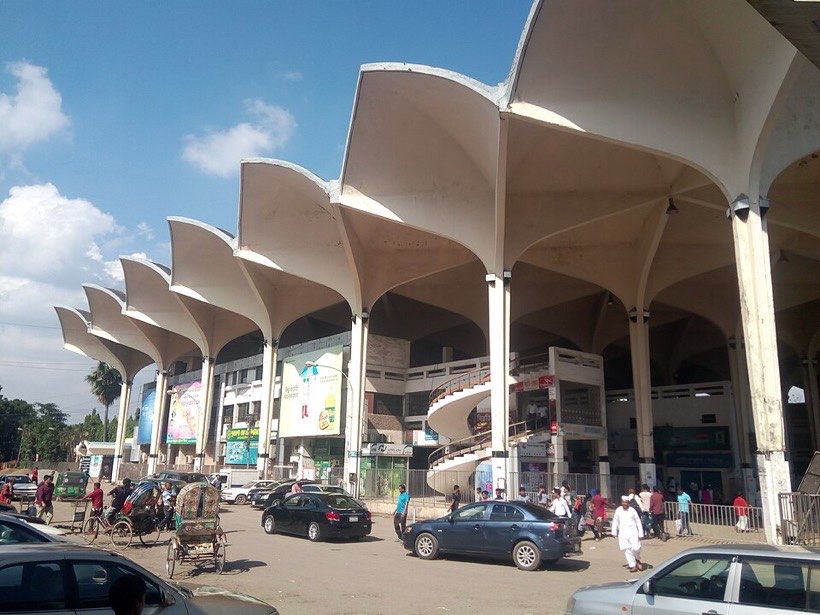
Story time: Catching the train
The train to Chattogram leaves at 7:40 a.m. Saba’s family woke at 6:15 a.m. and the station is 50 minutes away. “If we leave at 6:45, we arrive at 7:35,” said her father. “Just 5 minutes to spare – run!” laughed Saba.
Train times
Trains leave at exact times. A timetable lists departures and arrivals. We need to read time to the minute.
Railway stations display timetables.
Reading to the minute
Count in 5s to 35, then 2 more: 37. We say 37 minutes past 2. Or 23 minutes to 3.
2:37 – 37 minutes past 2, or 23 minutes to 3.
Your turn: The minute hand points between 7 and 8, 2 marks after 7. How many minutes past?
a.m. and p.m.
a.m. is before midday. p.m. is after midday. 8:00 a.m. is morning; 8:00 p.m. is evening. Midday is 12:00 p.m.
A day has 24 hours.
Using a timetable
Train A leaves at 6:40 a.m. and arrives at 1:10 p.m. Elapsed time: 6:40 → 12:40 is 6 hours, then 30 minutes = 6 h 30 min. Which train is quickest?
A made-up train timetable.
Worked example
- How long from 8:45 a.m. to 11:20 a.m.?
- 8:45 → 9:00 is 15 minutes; 9:00 → 11:00 is 2 hours.
- 11:00 → 11:20 is 20 minutes. Total: 2 h 35 min.
Did you know? Train B takes 6 h 45 min and train C takes 6 h 50 min, so train A is quickest.
Key words
- a.m.
- Times from midnight to midday.
- p.m.
- Times from midday to midnight.
- timetable
- A table showing when things happen.
- elapsed time
- The time that passes between a start and an end.
Meet the mathematician: John Harrison
1693–1776 · Yorkshire, England
John Harrison was a carpenter who taught himself to make clocks. Sailors needed a clock that kept perfect time at sea to find where they were. Harrison spent over 30 years building better and better sea clocks. His clock H4 lost only a few seconds on a long voyage – a huge success.
Activity: My day timeline
You need: a long paper strip, pens
- Mark 24 hours along the strip.
- Add 6 events in your day with times.
- Label a.m. and p.m.
- Work out how long you spend at school and asleep.
Think and talk
- Why do we need a.m. and p.m.?
- How long is it from 9:45 to 11:15?
- Why do trains need timetables?
What I learnt
- I can tell the time to the minute.
- I can use a.m. and p.m.
- I can read timetables and find elapsed time.