Calculating with fractions
Add, subtract and find fractions of amounts.
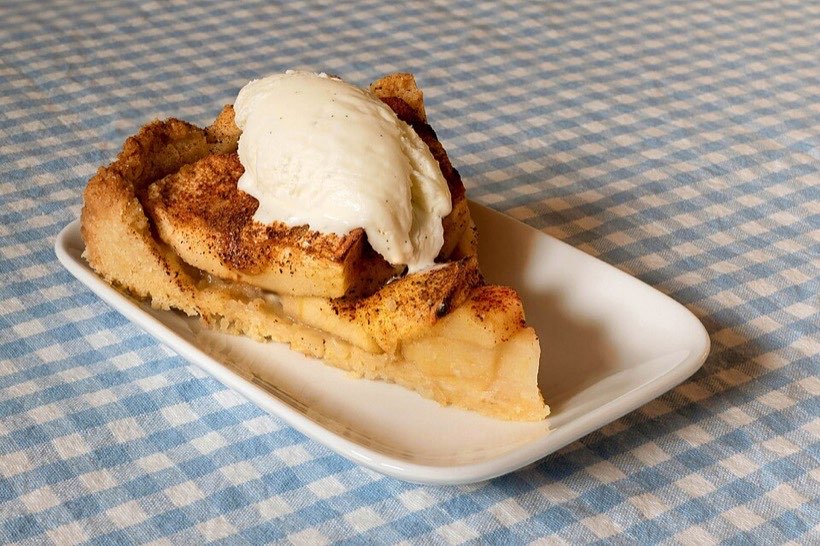
Story time: Pitha for the guests
Nanu made a tray of 24 pitha for the guests. “Give a quarter to the neighbours,” she said, “and half to Uncle’s family.” Arif counted carefully. A quarter of 24 is 6. Half is 12. “That leaves 6 for us!” he said. Nanu laughed. “You are a fraction wizard.”
Sharing food
Cooks share food into halves, quarters and eighths. We can find a fraction of a number by dividing. And we can add and take away fractions.
Food is often cut into equal parts to share.
Fractions of amounts
To find ¼ of 24, divide by 4: 6. To find ¾ of 24, find ¼ and multiply by 3: 18. A fraction is a division: 3/4 means 3 ÷ 4.
A quarter of 24 is 6.
Worked example
- Find 2/5 of 30.
- 1/5 of 30 = 30 ÷ 5 = 6.
- 2/5 = 2 × 6 = 12.
Simplifying
4/8 and ½ cover the same amount. To simplify, divide the top and bottom by the same number: 4/8 = ½. Simple fractions are easier to compare.
4/8 = ½
Adding and taking away
With the same denominator, add the tops: 3/4 + 2/4 = 5/4. 5/4 is an improper fraction – more than one whole: 1¼. Taking away works the same: 5/4 − 2/4 = 3/4.
3/4 + 2/4 = 5/4 = 1¼
Halves and quarters together
Halves and quarters are related: ½ = 2/4. So ½ + ¼ = 2/4 + 1/4 = 3/4. Estimate first: ½ + ¼ is less than 1.
½ + ¼ = 2/4 + 1/4 = 3/4
Your turn: You ate ½ a cake and your sister ate ⅛. What fraction was eaten?
Key words
- simplify
- Write a fraction with smaller numbers that mean the same, like 4/8 = ½.
- improper fraction
- A fraction bigger than one whole, like 5/4.
- related
- Denominators where one is a multiple of the other, like 4 and 8.
Meet the mathematician: Ahmes
about 1650 BCE · Egypt
Ahmes was a scribe in ancient Egypt. He copied a long scroll of maths problems, now called the Rhind papyrus. Many problems ask how to share loaves of bread fairly – using fractions! It is one of the oldest maths books in the world.
Activity: Fraction cook-off
You need: a recipe for 4 people, counters
- Halve the recipe for 2 people.
- Find ¾ of 12 spoons of rice using counters.
- Add ½ cup and ¼ cup of water. How much?
- Write each calculation.
Think and talk
- How do you find ⅓ of 18?
- Why is 5/4 more than one whole?
- Is ½ + ¼ more or less than 1?
What I learnt
- I can find fractions of amounts.
- I can simplify fractions.
- I can add and subtract fractions with the same or related denominators.