Grade 2 · Unit 1: Number and place value
Numbers to 1000 and beyond
Count in hundreds and meet the thousands.
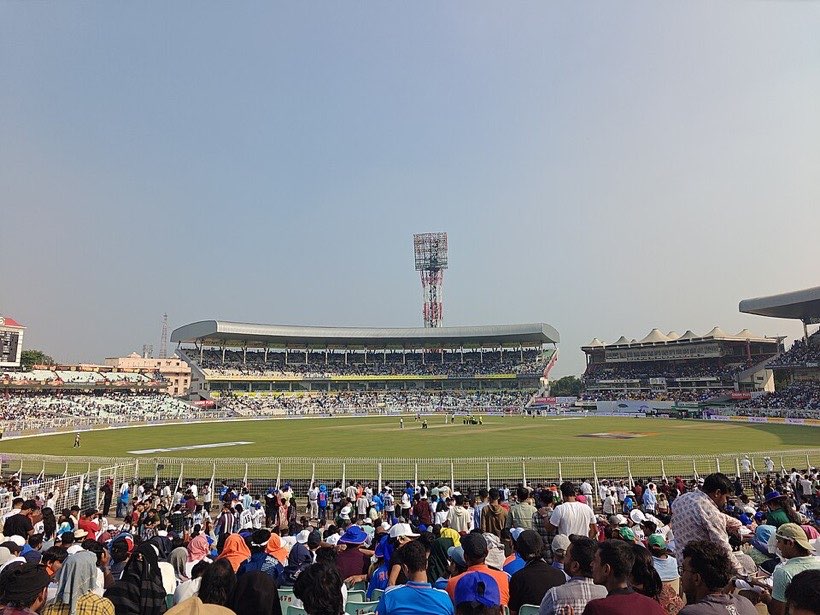
A thousand seats
A school hall may hold 600 people. A stadium holds many thousands. Ten hundreds make one thousand: 1000. After 999 comes 1000.
A big hall or stadium can hold thousands of people.
Counting in hundreds
We can count on in hundreds: 300, 400, 500, 600. We can count back too: 900, 800, 700. Only the hundreds digit changes.
300, 400, 500, 600: jumps of one hundred.
Your turn: Count on 3 hundreds from 450.
Comparing with < and >
Compare the hundreds first, then the tens, then the ones. 356 is greater than 349, so we write 356 > 349. 508 is less than 580, so we write 508 < 580.
The sign opens towards the bigger number.
Rounding to 10 and 100
To round to the nearest 10, look at the ones: 372 → 370. To round to the nearest 100, look at the tens: 372 → 400. Rounding helps us estimate.
372 rounds to 370 (nearest 10) and 400 (nearest 100).
Worked example
- Round 648 to the nearest 100.
- Look at the tens digit: 4.
- 4 is less than 5, so round down: 600.
Ten times bigger
Multiply 45 by 10: the 4 tens become 4 hundreds and the 5 ones become 5 tens. A zero fills the ones place: 450. In a shop, 10 pens at ৳12 each cost ৳120.
45 × 10 = 450. Each digit moves one place to the left.
Did you know? Numbers like 2,345 have four digits: 2 thousands, 3 hundreds, 4 tens and 5 ones.
Key words
- thousand
- 1000 – ten hundreds.
- greater than
- Bigger than. The sign is >.
- less than
- Smaller than. The sign is <.
Activity: Number line race
You need: a 0–1000 number line, cards with 3-digit numbers
- Each player takes 3 cards.
- Place your numbers on the number line.
- Write them in order with < signs.
- Round each to the nearest 100.
Think and talk
- Where might you see numbers in the thousands?
- Why do we compare the hundreds first?
- What happens to a number when you multiply it by 10?
What I learnt
- I can count on and back in hundreds.
- I can compare numbers with < and >.
- I can round to the nearest 10 and 100.
- I can multiply by 10.