Grade 2 · Unit 1: Number and place value
Multiplying
Equal groups make multiplying easy.
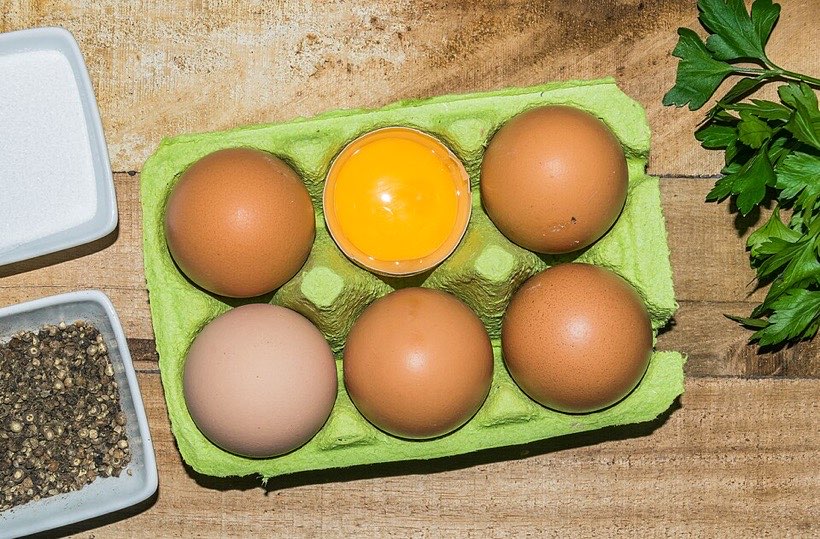
Equal groups everywhere
Eggs are packed in rows of the same size. Equal rows and columns make an array. Counting arrays is quicker with multiplication.
Eggs packed in rows: an array.
Groups of
Here are 4 equal groups with 5 bananas in each. 5 + 5 + 5 + 5 = 20. We write 4 × 5 = 20. We say “4 times 5”.
4 groups of 5 = 20.
Arrays
This array has 3 rows of 6. 3 × 6 = 18. Turn it round: 6 rows of 3 is also 18. 6 × 3 = 18!
3 rows of 6 = 18, and 6 columns of 3 = 18.
Times tables for 2, 5 and 10
The 2 times table is counting in 2s. The 5 times table ends in 5 or 0. The 10 times table always ends in 0.
Counting in 2s, 5s and 10s gives these tables.
Did you know? Multiplying in any order gives the same answer: 3 × 6 = 6 × 3.
Key words
- multiply
- Add equal groups quickly. The sign is ×.
- equal groups
- Groups with the same number in each.
- array
- Objects in equal rows and columns.
- times table
- A list of a number multiplied by 1, 2, 3 …
Activity: Array hunt
You need: squared paper, counters
- Make an array with 12 counters.
- Write the multiplication: e.g. 3 × 4 = 12.
- Can you make 12 a different way? (2 × 6, 1 × 12)
- Draw all your arrays.
Think and talk
- Where do you see equal groups at home?
- Why is 4 × 5 quicker than adding 5 four times?
- What pattern do you see in the 10 times table?
What I learnt
- I can make and describe equal groups.
- I can use arrays to multiply.
- I know the 2, 5 and 10 times tables.