Grade 2 · Unit 1: Number and place value
More times tables
The 3, 4, 6, 8 and 9 tables.
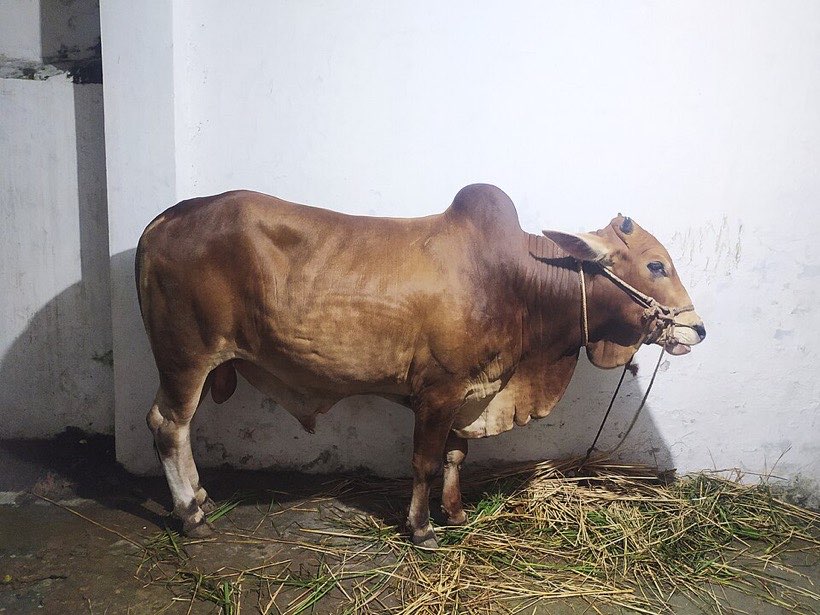
Legs and wheels
A cow has 4 legs. How many legs on 6 cows? Count in fours: 4, 8, 12, 16, 20, 24. Times tables make this quick.
Doubling links
The 4 table is double the 2 table. The 8 table is double the 4 table. The 6 table is double the 3 table.
Any order
Turn the array around: 3 × 6 = 6 × 3 = 18. Multiplying works in any order. In 3 × 6 = 18, 3 and 6 are factors and 18 is the product.
Split to multiply
To multiply 13 by 4, split 13 into 10 and 3. 4 × 10 = 40 and 4 × 3 = 12. 40 + 12 = 52.
The 9 table trick
9 × 4 = 36, and 3 + 6 = 9. Or work out 10 × 4 = 40 and take away 4: 36. Every multiplication fact gives division facts: 36 ÷ 9 = 4. The 4 is the quotient.
Two steps
A shop has 3 boxes of 8 eggs. 5 eggs break. Step 1: multiply to find all the eggs: 3 × 8 = 24. Step 2: take away the broken ones: 24 − 5 = 19.
What I learnt
- I know the 3, 4, 6, 8 and 9 tables.
- I can multiply in any order.
- I can split a number to multiply a 2-digit number.