Grade 5 · Unit 6: Earth’s movements
Exploring the stars
Every star is a sun, far, far away.
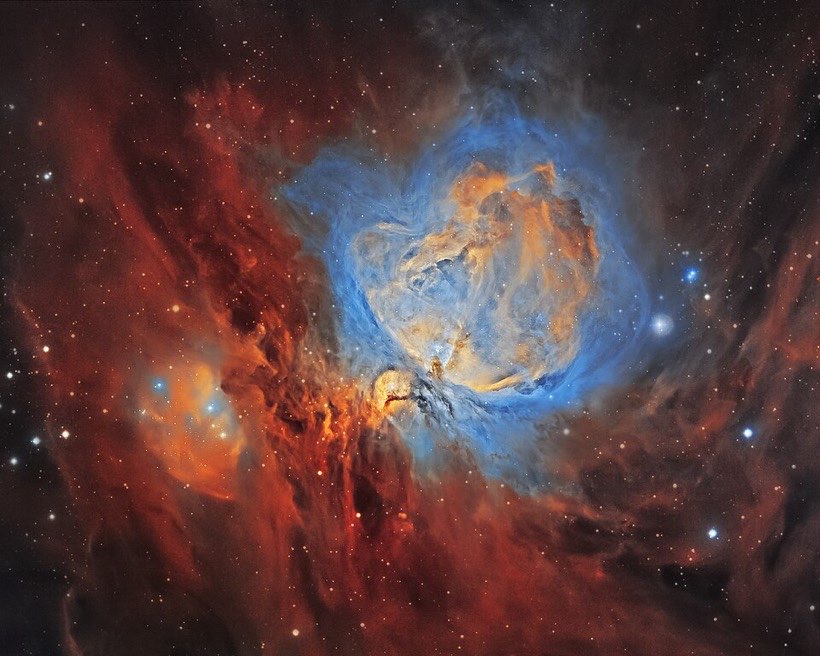
Stars are suns
Every star you see at night is a sun, like ours. They look tiny because they are incredibly far away. Some are bigger and hotter than our Sun; some are smaller and cooler.
Stars have different colours: blue stars are the hottest, and red stars are cooler.
Constellations
People have joined bright stars into patterns called constellations. Orion the hunter can be seen on winter evenings in Bangladesh. The seven bright stars of the Big Dipper are called Saptarshi in Bengali.
Long ago, sailors and farmers used constellations to find directions and to know when to plant crops.
Huge distances
Distances to stars are measured in light-years: the distance light travels in a year. The nearest star after the Sun is about 4 light-years away. When you look at a star, you see light that left it years – or centuries – ago.
One light-year is about 9.5 million million kilometres.
Galaxies and telescopes
Our Sun is one of billions of stars in the Milky Way galaxy. Telescopes collect faint starlight so we can see further into space. Space telescopes above the air give the clearest views of all.
The James Webb Space Telescope, launched in 2021, can see galaxies whose light set off more than 13 billion years ago.
What I learnt
- I know that stars are suns that are very far away.
- I can describe constellations, light-years and galaxies.