Grade 5 · Unit 4: The way we see things
Light travels from a source
We see things when light enters our eyes.
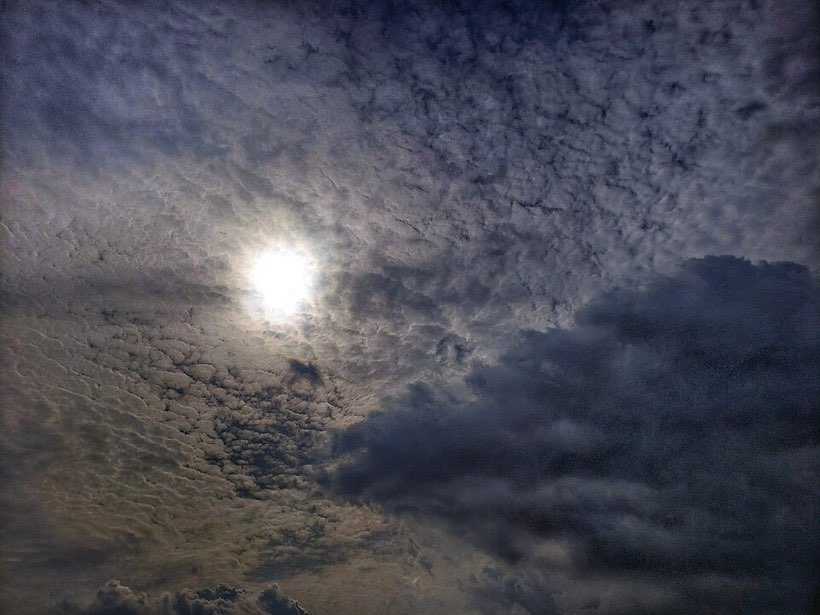
Light sources
A light source gives out its own light. It is luminous. The Sun, stars, fire, lamps and screens are light sources. Most things we see are not light sources – they reflect light.
The Sun is our most important light source.
Some animals are light sources too. Fireflies and some deep-sea fish make their own light through a chemical reaction.
How we see
Light travels from a source in straight lines. It hits an object and some of it bounces off. The reflected light enters our eyes, and we see the object.
Trace the path of light from a lamp in the Light & Shadows lab.
We see coloured objects because they reflect some colours of light and absorb the rest. A green leaf reflects green light.
Drawing rays
Scientists draw light as straight lines called rays. Arrows on the rays show the direction the light travels. Rays go from the source, to the object, to the eye – never from the eye.
Arrows show the direction light travels.
Long ago, some people thought eyes sent out rays to see things. The scientist Ibn al-Haytham showed about 1,000 years ago that light comes into our eyes.
The Moon shines?
The Moon is not a light source. It looks bright because it reflects light from the Sun.
The Moon shines only because it reflects sunlight.
The Moon’s phases change because we see different amounts of its sunlit side as it orbits the Earth.
Did you know? Light from the Sun takes about 8 minutes to reach Earth, travelling about 300,000 km every second.
Key words
- light source
- Something that gives out its own light.
- ray
- A straight line that shows the path of light.
- luminous
- Giving out its own light.
Activity: Ray diagrams
You need: paper, a ruler, coloured pencils
- Draw a lamp, a book and an eye.
- Use a ruler to draw a ray from the lamp to the book.
- Draw a second ray from the book to the eye.
- Add arrows to show the direction the light travels.
- Explain your diagram to a partner.
Think and talk
- Is the Moon a light source? How do you know?
- Why can’t you see anything in a completely dark room?
- Which way should the arrows point in a ray diagram?
What I learnt
- I know that light travels from a source in straight lines.
- I know that we see objects when reflected light enters our eyes.
- I can draw a simple ray diagram.