Grade 5 · Unit 3: States of matter
Boiling
Bubbles, steam and 100 °C.
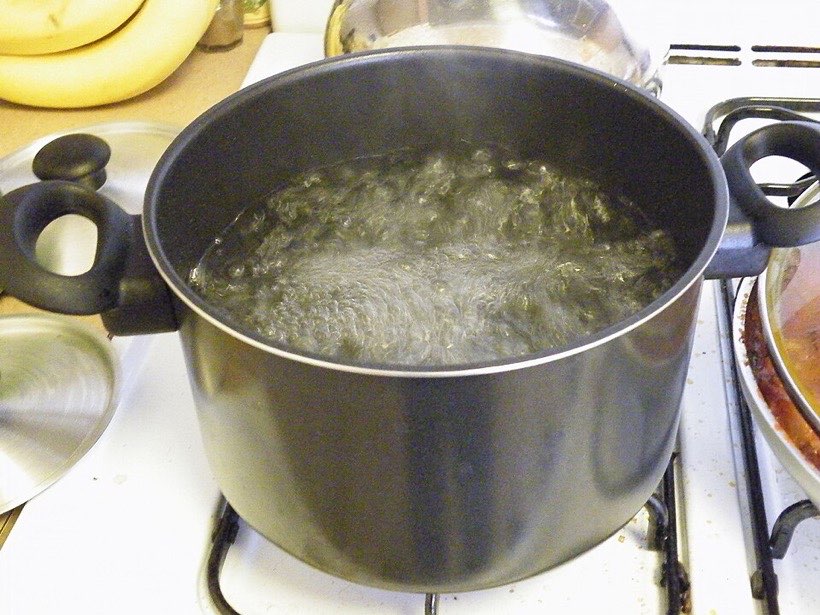
What is boiling?
When water is heated strongly, bubbles form all through it. The bubbles are pockets of water vapour. This is boiling. Unlike evaporation, it happens throughout the liquid, not just at the surface.
Boiling happens when the liquid is hot enough for bubbles of vapour to form inside it, not just at the surface.
Boiling point
Water boils at 100 °C. This is its boiling point. While the water boils, the temperature stays steady at 100 °C. The extra heat is used to turn liquid into gas.
Adding salt to water raises its boiling point a little, so salty water boils at just over 100 °C.
Boiling water to make it safe
Boiling water kills most germs that cause diseases like diarrhoea and typhoid. Many families in Bangladesh boil drinking water to make it safer. Let it cool and keep it covered.
Water should be kept at a rolling boil for at least one minute to kill germs, then stored in a clean, covered container.
Different liquids
Different liquids have different boiling points. Cooking oil can be heated to over 200 °C, which is why it can fry food and cause bad burns.
Hot oil can cause very bad burns. Never add water to hot oil – it boils instantly and makes the oil spit.
What I learnt
- I know that water boils at 100 °C.
- I know that the temperature stays steady while water boils.
- I know the difference between boiling and evaporation.