Grade 5 · Unit 3: States of matter
Condensation
Why do drops appear on a cold glass?
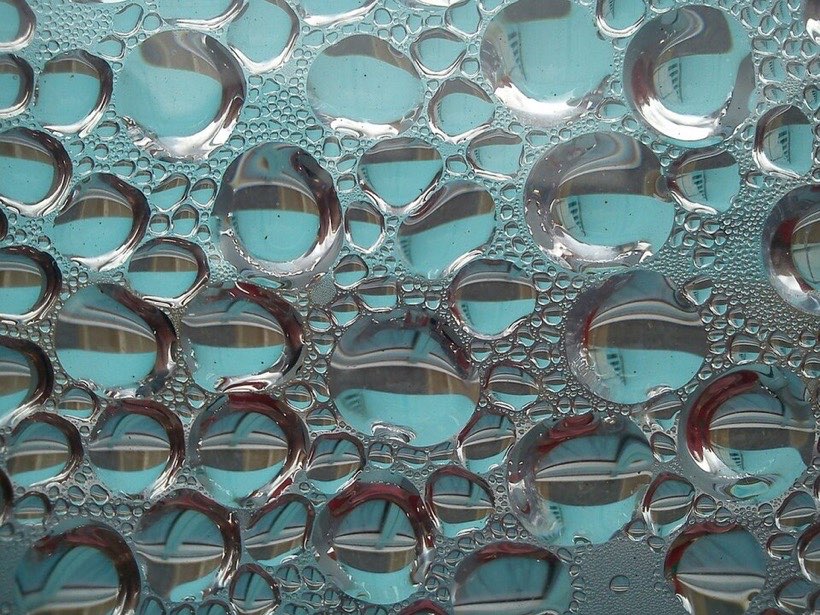
Drops from nowhere
Take a cold drink out of the fridge. Soon, drops form on the outside of the glass. The water did not leak through the glass. Water vapour in the air cooled on the cold glass and turned back into liquid water.
Cold drinks bottles “sweat” on a hot, humid day in Dhaka because there is lots of water vapour in the air to condense.
Gas to liquid
When a gas cools and turns into a liquid, it is called condensation. It is the opposite of evaporation. Breathe on a cold mirror and it mists up with tiny drops.
Your breath contains water vapour. On a cold morning you can see it condense into a little cloud in the air.
Dew and fog
On cool nights, water vapour condenses on grass and leaves. This is dew. Winter mornings in Bangladesh are often foggy. Fog is water vapour that has condensed into tiny drops in the air.
Farmers in dry places sometimes collect dew and fog with nets, giving them water for their crops.
Steam and clouds
Steam from a kettle is invisible at first. A little way above the spout it cools and condenses into tiny drops – the white cloud you see. Clouds in the sky form in the same way.
Real steam is invisible. Look closely at a kettle: there is a clear gap just above the spout before the white cloud appears.
What I learnt
- I know that condensation is when a gas cools and changes into a liquid.
- I can give examples of condensation.