Grade 5 · Unit 3: States of matter
Investigating evaporation
What makes water evaporate faster?
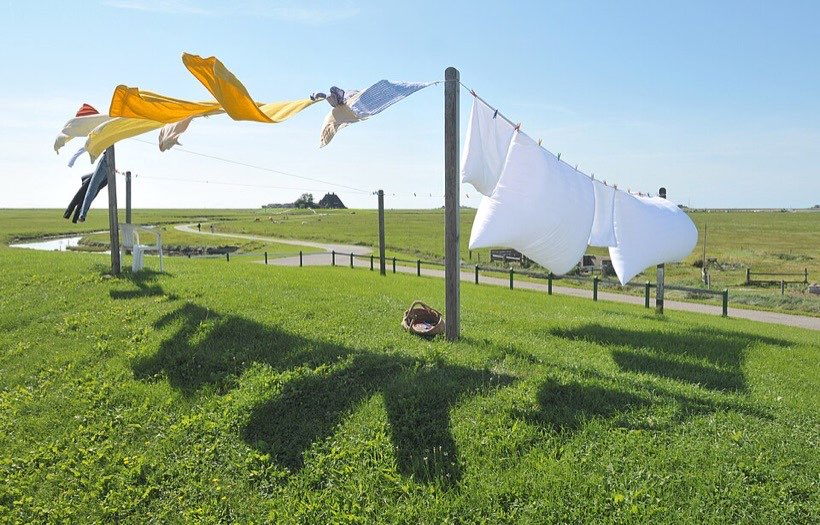
Four factors
Four factors change how fast water evaporates. Temperature: warmer water evaporates faster. Wind: moving air carries water vapour away. Surface area: a wide dish evaporates faster than a narrow one. Humidity: dry air takes up more water vapour.
Wind, warmth and a large surface all speed up evaporation.
Washing hung out on a hot, dry, windy day with clothes spread out dries fastest – all four factors help at once.
Planning a test
Choose one factor to test, for example surface area. Put the same volume of water in containers of different widths. Keep the place, temperature and starting volume the same.
Follow water as it evaporates and condenses in the Water Cycle lab.
Containers should be put side by side, so they get the same sunshine, wind and temperature.
Measuring
Measure the water left each day with a measuring cylinder. Read the scale at eye level. Record the volume in a table, then draw a line graph.
A measuring cylinder measures volume in millilitres.
The steeper the line on the graph, the faster the water is evaporating.
Monsoon and winter
In the monsoon the air is very humid, so clothes dry slowly. In the dry winter months, things dry much faster.
In the humid monsoon, clothes take a long time to dry.
Many families dry clothes under a fan or near a window in the monsoon, because moving air helps carry away the water vapour.
Did you know? Washing on a line can dry several times faster on a windy day than on a still day.
Key words
- factor
- Something that can change the result of an investigation.
- surface area
- How much of a liquid’s surface is open to the air.
- humidity
- How much water vapour is in the air.
- line graph
- A graph with points joined by a line to show change over time.
Activity: Surface area test
You need: 3 containers of different widths, a measuring cylinder, water, a ruler
- Put 100 ml of water in each container.
- Leave them side by side in the same place.
- Measure the water left each day for 5 days.
- Draw a line graph with a line for each container.
- Write a conclusion about surface area.
Think and talk
- Why do clothes take longer to dry in the monsoon?
- Which factor would you test? How would you keep it fair?
- Why does spreading clothes out help them dry?
What I learnt
- I know the factors that affect evaporation.
- I can plan a fair test and present results in a line graph.