Grade 5 · Unit 2: The life cycle of flowering plants
Plant life cycles
Seed to plant to flower to seed – round and round.
The cycle
Flowering plants have a life cycle. A seed germinates, grows into a mature plant, flowers, is pollinated and makes new seeds. The seeds are dispersed, and the cycle starts again.
Watch the whole life cycle in the Seed to Fruit lab.
Some plants can also make new plants without seeds: potatoes grow from pieces of potato, and bananas grow from shoots at the base.
Rice: one year
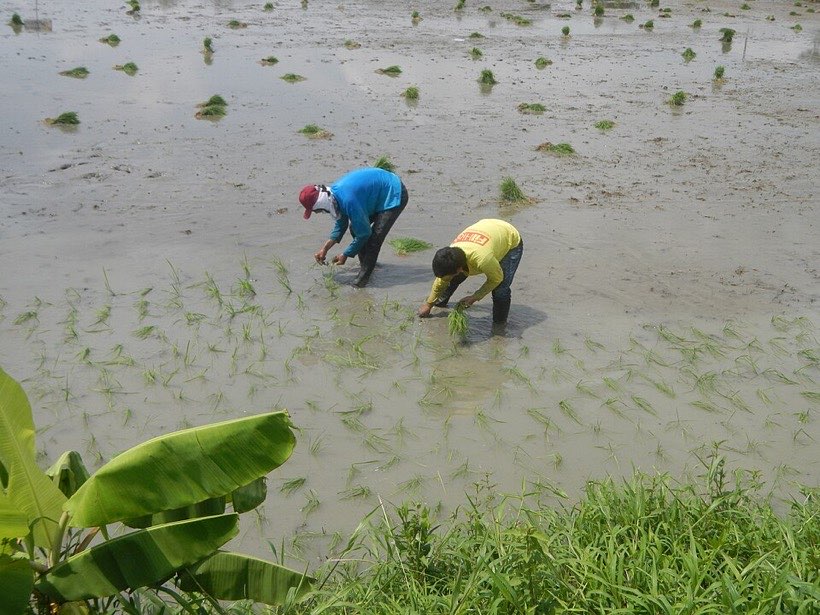
Rice is an annual plant. It completes its life cycle in less than a year. Farmers sow seeds, plant out seedlings, and harvest the grains a few months later. The grains are seeds – some are eaten and some are saved to plant again.
Farmers plant rice seedlings in flooded paddy fields.
Bangladesh grows three main rice crops a year: aus, aman and boro, each suited to a different season.
Mango: many years
A mango tree is a perennial plant. It lives for many years. It takes several years to grow big enough to flower. Then it flowers and fruits every year, for decades.
Mangoes growing on a tree that fruits year after year.
Rajshahi and Chapainawabganj are famous for their mango orchards. Some mango trees there are more than 100 years old.
Comparing life cycles
All flowering plants go through the same stages. But the time each stage takes is very different.
All flowering plants follow the same stages, at different speeds.
Mustard completes its life cycle in about three months, while a banyan tree can live for hundreds of years.
Did you know? Some bamboo plants flower only once every 40 to 120 years – and then all the plants of that kind flower together!
Key words
- life cycle
- The stages a living thing goes through during its life.
- annual
- A plant that completes its life cycle in one year.
- perennial
- A plant that lives for many years.
- mature
- Fully grown and able to reproduce.
Activity: Life cycle wheel
You need: two paper circles, a split pin, colouring pencils
- Divide one circle into 6 parts: seed, germination, seedling, mature plant, flower and pollination, fruit and seed dispersal.
- Draw each stage.
- Cut a window in the second circle and join them with the split pin.
- Turn the wheel and explain each stage to a partner.
Think and talk
- What would happen if a plant could not make seeds?
- Which plants in your area are annuals? Which are perennials?
- Why do farmers save some rice grains?
What I learnt
- I can describe the life cycle of a flowering plant.
- I know the difference between annual and perennial plants.