Grade 5 · Unit 1: Investigating plant growth
Investigating germination
Do seeds need light to germinate? Test it!
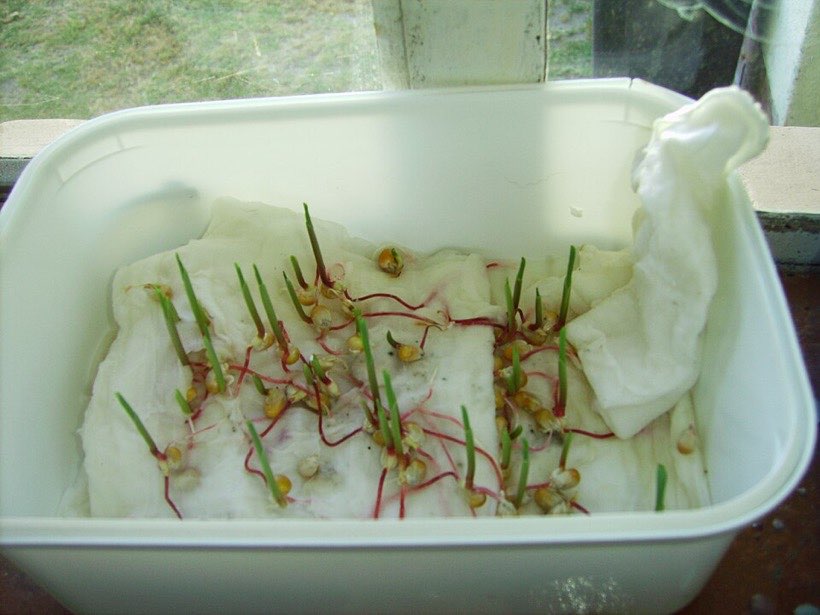
What do seeds need?
Scientists ask: what conditions do seeds need to germinate? Possible factors are water, warmth, air and light. We can test each factor with a fair test.
The things that might affect an investigation are called factors or variables. A good investigation tests one factor at a time.
Planning the test
Set up dishes of seeds. In each one, take away one factor. One has no water. One is in a fridge. One is in the dark. One has everything. Use the same kind and number of seeds in each dish.
Dish A, which has everything, is called the control. We compare the other dishes with it.
The results
Seeds with water, warmth and air germinate well – even in the dark! Seeds with no water do not germinate. Seeds in the cold germinate slowly or not at all. So seeds need water, warmth and air, but not light, to germinate.
Light is not needed for germination because the seed uses its own food store. Light becomes important later, when the seedling needs to make food in its leaves.
Using evidence
A conclusion says what the results show. Use your results as evidence: “7 out of 10 seeds in the dark germinated, so light is not needed.” Repeat the test to check your results are reliable.
Scientists write “the evidence suggests…” because one investigation is rarely the final word – others may repeat it and find more.
What I learnt
- I can plan a fair test about germination.
- I know that seeds need water, warmth and air to germinate, but not light.
- I can write a conclusion using evidence.