Grade 4 · Unit 7: Earth and its habitats
Volcanoes
Where melted rock bursts through the crust.
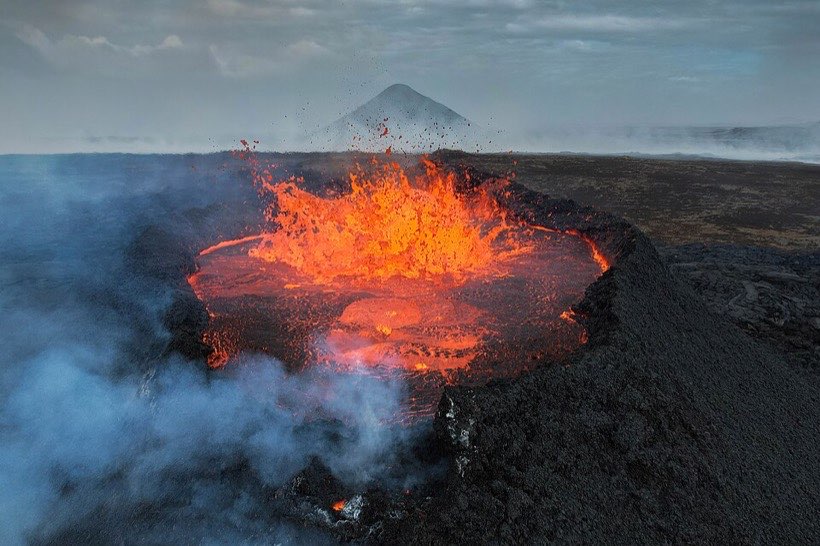
What is a volcano?
A volcano is an opening in the Earth’s crust. Magma rises up through cracks from deep underground. When it reaches the surface, it is called lava.
An active volcano erupts often, a dormant volcano has not erupted for a long time but could, and an extinct volcano will not erupt again.
Eruptions
When a volcano erupts, lava, ash and gases burst out of the crater. Lava can be over 1,000 °C. It cools and hardens into new rock. Ash clouds can spread for hundreds of kilometres.
Volcanic ash clouds can stop aeroplanes flying, because the tiny pieces of rock can damage their engines.
Different volcanoes
Composite volcanoes are tall cones built from layers of lava and ash. Shield volcanoes, like those in Hawaii, have runny lava that spreads out into wide, gentle slopes. Some volcanoes are under the sea and make new islands.
Mount Fuji in Japan is a famous composite volcano. Mauna Loa in Hawaii is a shield volcano – one of the largest on Earth.
The Ring of Fire
Most volcanoes are found where pieces of the Earth’s crust meet. Around the Pacific Ocean there are so many that it is called the Ring of Fire. Bangladesh has no active volcanoes.
Volcanoes can be dangerous, but volcanic soil is very rich. Farmers grow coffee, rice and fruit on the slopes of volcanoes in Indonesia.
What I learnt
- I can describe how a volcano erupts.
- I know the difference between magma and lava.
- I know where most volcanoes are found.