Grade 4 · Unit 5: Electricity and magnetism
Electricity flows in circuits
Electricity needs a complete loop to flow.
A loop for electricity
Electricity flows around a circuit. A circuit must be a complete loop, with no gaps. The flow of electricity is called the current.
Build circuits and watch the current flow in the Circuit Builder lab.
Scientists draw the current flowing from the + end of the cell, round the circuit, to the – end.
The cell pushes
A cell pushes the current around the circuit. The current leaves one end of the cell, goes round the circuit and comes back to the other end. When the cell runs out of energy, the current stops.
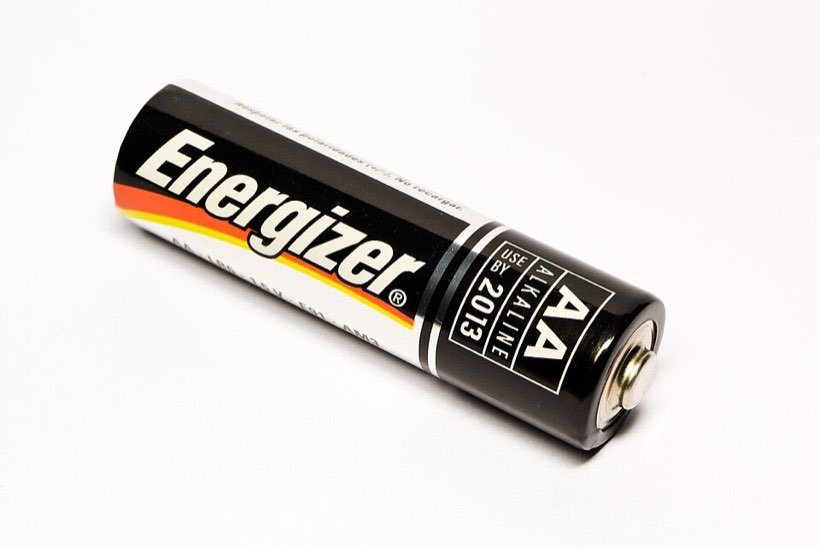
A cell has a positive (+) end and a negative (–) end.
A cell stores chemical energy. When the circuit is complete, a chemical reaction inside the cell pushes the current round.
Breaking the loop
If there is a gap anywhere in the circuit, the current stops. All the bulbs and motors in that loop stop working. A loose wire or a broken bulb can make a gap.
A gap anywhere in the loop stops the current everywhere.
Fairy lights on one loop all go out if one bulb breaks. Newer sets are wired so that the others stay on.
Electricity in the body?
Even your body uses electricity! Nerves send tiny electrical messages between your brain and your muscles.
Nerves carry tiny electrical messages around your body.
Doctors can measure the tiny electrical signals from your heart with a machine called an ECG.
Did you know? The current in a circuit travels so fast that a bulb lights the instant the circuit is complete.
Key words
- circuit
- A complete path that electricity flows around.
- current
- The flow of electricity around a circuit.
- cell
- A source of electricity, often called a battery.
- complete
- With no gaps or breaks.
Activity: Find the fault
You need: a cell in a holder, a bulb in a holder, wires, a few “faulty” circuits set up by the teacher
- Look at each circuit. Predict whether the bulb will light.
- Test it.
- If it does not light, find the fault: a gap, a loose clip, a flat cell or a broken bulb.
- Fix it and test again.
Think and talk
- Why does a broken wire stop a whole circuit working?
- What happens to a circuit when its cell runs out?
- Where do you use cells at home?
What I learnt
- I know that electricity flows in a complete circuit.
- I can find faults in a circuit.