Grade 4 · Unit 3: Solids, liquids and gases
Matter is made of particles
Tiny particles explain how solids, liquids and gases behave.
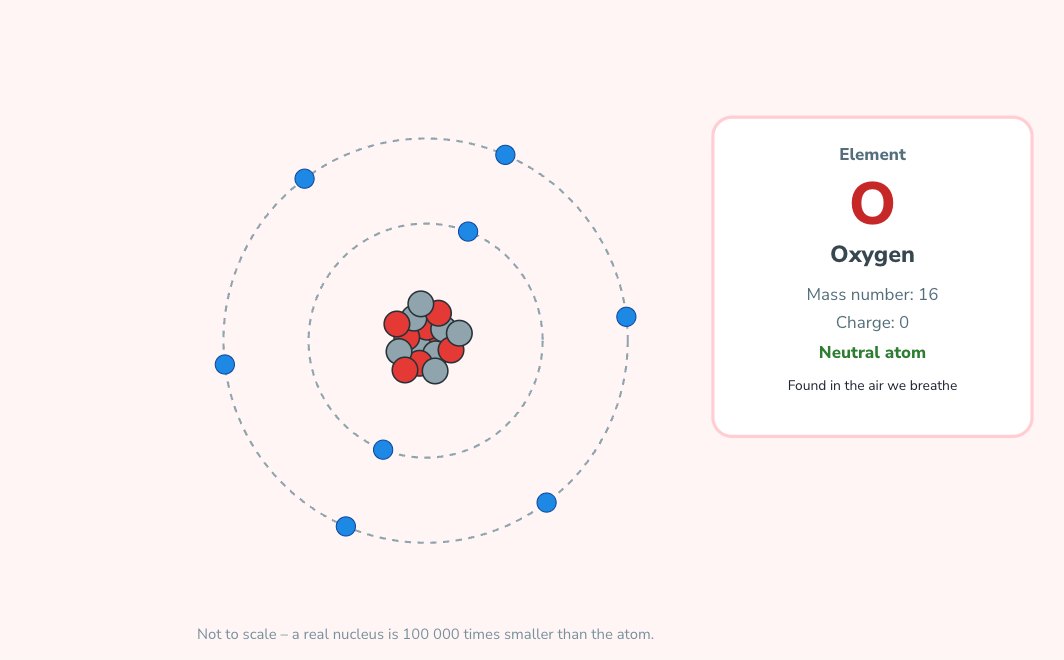
Too small to see
All matter is made of tiny particles. They are far too small to see, even with a normal microscope. Scientists use a model to explain how particles behave.
Scientists can now see the patterns of particles using special electron microscopes that magnify things millions of times.
Particles in a solid
In a solid, particles are packed close together in a regular pattern. They are held tightly, so they cannot move around. They can only vibrate on the spot. That is why solids keep their shape.
Because the particles in a solid are held firmly, a solid such as a brick keeps its shape and is hard to squash.
Particles in a liquid
In a liquid, particles are still close together. But they are not arranged in rows. They can slide past each other. That is why liquids flow and take the shape of their container.
Liquids are hard to squash because their particles are already touching – there is almost no space to push them into.
Particles in a gas
In a gas, particles are far apart. They move very fast in all directions and bump into the walls of their container. That is why gases spread out to fill any space.
When you pump up a bicycle tyre, you push more and more gas particles into the same space. They hit the inside of the tyre harder, making it firm.
What I learnt
- I know that matter is made of tiny particles.
- I can use a particle model to explain solids, liquids and gases.