Grade 3 · Unit 2: Looking after ourselves
Exercise and sleep
Moving and sleeping are both part of being healthy.
Keep moving
Exercise makes your heart, lungs and muscles stronger. It helps you to stay a healthy weight. It can also make you feel happy and calm.
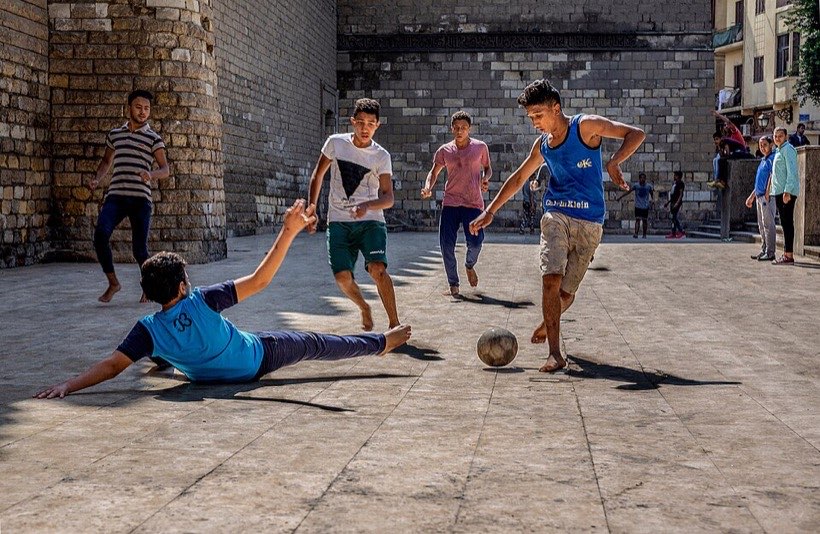
Playing football is exercise that makes the heart and muscles stronger.
Children should be active for about one hour every day. Running, skipping, swimming, cycling and dancing all count!
Your heart works harder
When you exercise, your heart beats faster. It pumps more blood to your muscles. You can feel this beat as your pulse in your wrist or neck.
Explore the heart and blood in the Inside My Body lab.
A child’s heart beats about 80 to 100 times a minute when resting. After running it can beat more than 150 times a minute.
Rest and sleep
Your body needs sleep to rest and repair itself. Sleep helps your brain to remember what you learnt. Children need about 9 to 12 hours of sleep each night.
Children need about 9 to 12 hours of sleep every night.
Screens like phones and TVs before bed can make it harder to fall asleep. Try reading a book instead.
A healthy day
A healthy day has a balanced diet, exercise, sleep and keeping clean. Wash your hands with soap before eating and after using the toilet. Small habits every day make a big difference.
Did you know? Your heart beats about 100,000 times every day – without you even thinking about it!
Key words
- exercise
- Moving your body to keep it fit and strong.
- heart
- The organ that pumps blood around the body.
- pulse
- The beat of the heart that you can feel in your wrist or neck.
- muscles
- Parts of the body that pull on bones to make us move.
- sleep
- Rest when the body and brain recover.
Activity: Pulse investigation
You need: a stopwatch or clock with seconds, paper and a pencil
- Sit still for two minutes. Find your pulse on your wrist with two fingers.
- Count the beats for 15 seconds. Multiply by 4 to get beats per minute.
- Predict: what will happen after exercise?
- Do star jumps for one minute, then count your pulse again.
- Rest for 5 minutes and count again. What pattern do you see?
Think and talk
- What exercise do you enjoy? How do you feel afterwards?
- Why do you think your heart beats faster when you run?
- What could help you get a good night’s sleep?
What I learnt
- I know that exercise keeps my heart and muscles strong.
- I can measure my pulse.
- I know why sleep is important.