Grade 2 · Unit 3: Changing materials
Heating and cooling
Melt it, freeze it, cook it!
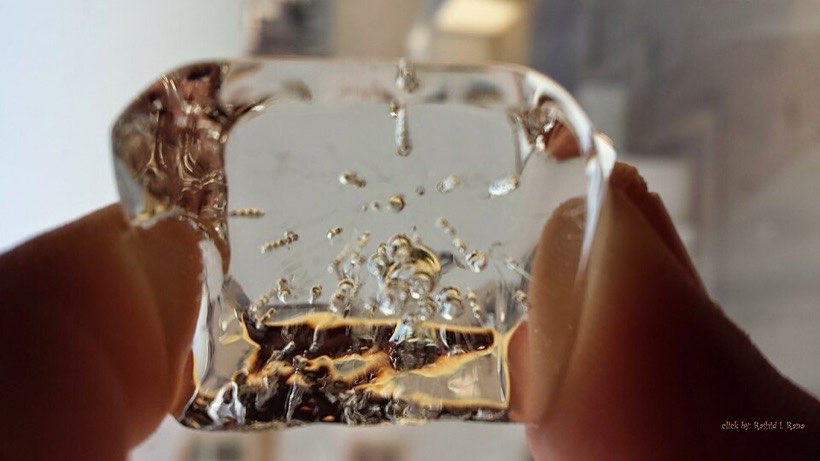
Solids and liquids
Ice is a solid. It keeps its shape. Water is a liquid. It flows and fills its container.
Water can be a solid (ice), a liquid (water) or a gas (water vapour).
Melting
When we heat ice, it melts into water. Chocolate and candle wax melt too.
Ice melting into water as it warms up.
Ice melts at 0 °C. In a hot room it melts quickly.
Freezing
When we cool water a lot, it freezes into ice. Melting and freezing can go back and forth.
Ice cubes in a glass. Ice is solid water.
Water freezes into ice when it is cooled to 0 °C, like in a freezer.
Changes for ever
Some changes cannot go back. A cooked egg cannot become raw again. Cooked rice cannot become hard rice grains again.
A fried egg cannot turn back into a raw egg.
Heating the egg changes it for ever. Burning wood and baking a cake are also changes that cannot go back.
Did you know? Ghee is solid in a cold winter kitchen but melts to a liquid on a hot day.
Key words
- heat
- Make something hotter.
- cool
- Make something colder.
- melt
- Change from a solid to a liquid by heating.
- freeze
- Change from a liquid to a solid by cooling.
- solid
- Keeps its own shape, like ice or a stone.
- liquid
- Flows and takes the shape of its container, like water.
Activity: Ice cube race
You need: ice cubes the same size, small plates, a timer, places: sunny window, shady corner, a hand, a fridge
- Predict: where will the ice melt fastest? Slowest?
- Put one ice cube in each place at the same time.
- Check every 5 minutes. Record which have melted.
- Put the water from one plate in the freezer. What happens by tomorrow?
Think and talk
- What melts on a hot summer day?
- What foods do we heat when we cook? How do they change?
- Can you turn toast back into bread?
What I learnt
- I know that heating can melt solids into liquids.
- I know that cooling can freeze liquids into solids.
- I know that some changes cannot be undone.