How salt is made
From sea water to your plate.
Read the explanation
Read this explanation. Notice it never uses I or you.
How is sea salt made?
by InquiryMind
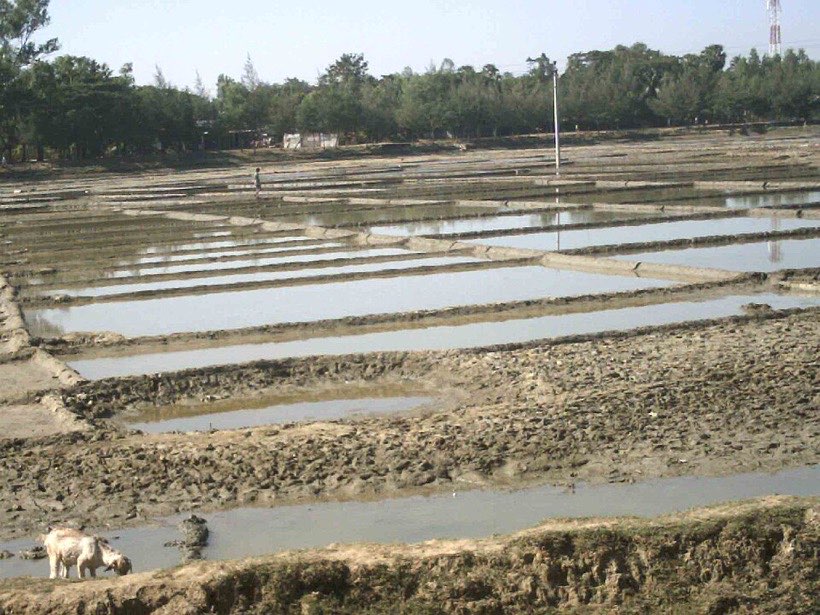
Sea water contains dissolved salt. On the coast of Bangladesh, salt is produced by using the heat of the sun.
First, sea water is let into shallow, flat pans of clay. The pans are left in the sun.
As the sun heats the water, it slowly evaporates, leaving the salt behind. This process is called evaporation.
After several days, white salt crystals form on the bottom of the pans.
The crystals are then raked into piles, dried and cleaned before being packed and sold.
Salt farmers in Cox’s Bazar collect salt from shallow pans.
Impersonal style
Explanations often use an impersonal style: no I, we or you. Passive forms are common: salt is produced, crystals are raked. This makes the text sound objective and factual.
Explanations often use the impersonal style.
Specialised words and their families
Use specialised vocabulary for the topic: evaporate, crystals. Words built from the same root help you spell and understand: produce → production. If you can spell one, you can work out its relatives.
Related words share a root.
Your turn: Write two words related to “sign”.
Key words
- explanation
- A text that explains how or why something happens.
- impersonal
- Written without I or you, so it sounds objective.
- evaporate
- Change from a liquid into a gas.
- root
- The main part of a word that related words are built from.
Activity: Evaporation experiment
You need: salty water, a shallow dish, a sunny window
- Leave salty water in a dish in the sun for several days.
- Record what happens each day.
- Write an impersonal explanation of the process.
- Use three specialised words and one word family.
Think and talk
- Why is sunshine important for making salt?
- Why do explanations avoid “I think”?
- What other process could you explain?
What I learnt
- I understand the impersonal style in explanatory texts.
- I can use specialised vocabulary for a topic.
- I can use known spellings to work out related words and roots.