Grade 2 · Unit 5: Caring for Our Planet
Fresh water and where it comes from
If Earth has so much water, why do some places run short?
Water, water everywhere
Water covers about seven tenths of Earth, but nearly all of it is in the oceans and is too salty to drink or to water crops. Only about three out of every hundred drops are fresh water. Most of that fresh water is frozen in ice sheets and glaciers, or is deep underground. Only a tiny part is in lakes and rivers.
Most fresh water is frozen in glaciers and ice sheets.
The water cycle in detail
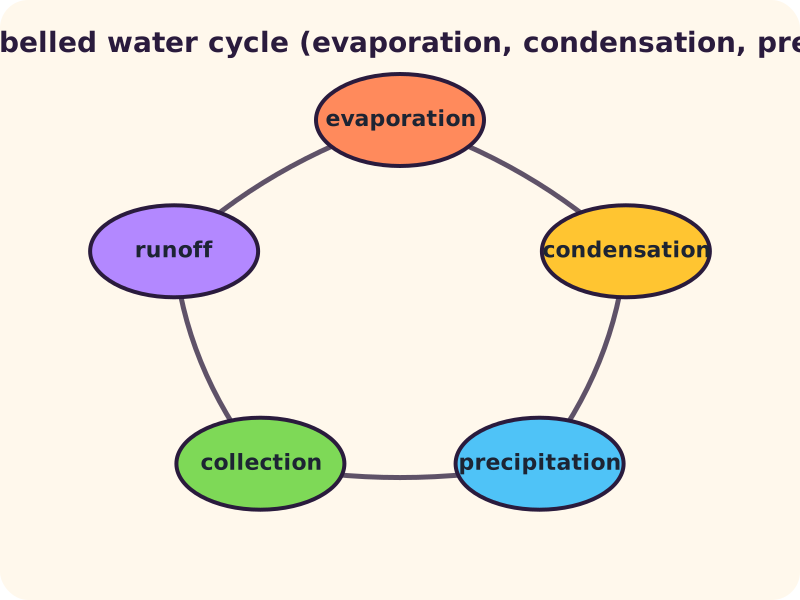
The water cycle keeps fresh water moving. The Sun's heat makes water evaporate from seas, lakes and soil. Plants also give out water through their leaves, which is called transpiration. The vapour rises, cools and condenses into clouds. Then it falls as precipitation: rain, snow, sleet or hail.
The water cycle moves water around the planet.
Where our water comes from
Rain and snow fill rivers and lakes. Some soaks into the ground and becomes groundwater, held in rocks and soil. Groundwater comes up in springs or can be pumped out of wells. Many cities store water in reservoirs behind dams. From these sources, water goes to treatment plants and then through pipes to homes and schools.
A reservoir stores water behind a dam.
Why water is not shared equally
Rain does not fall evenly. Some places are very wet and others are very dry. Some places have rainy and dry seasons. When too many people use water, or when water is wasted or polluted, shortages happen. Sometimes people have to walk for hours to fetch water. Careful planning can help.
In dry places, people may have to travel far for water.
Different viewpoints: A farmer needs water for crops. A city needs it for homes. A fish needs a river to stay full. Who should have the first share of the river when there is not enough for everyone?
Did you know? Groundwater can be thousands of years old. Some of it fell as rain long before towns and cities were built.
Key words
- fresh water
- water that is not salty
- evaporate
- to change from liquid water into vapour
- condense
- to change from vapour back into liquid drops
- precipitation
- water that falls from clouds, such as rain or snow
- groundwater
- water held underground in soil and rock
- transpiration
- water vapour that plants give out through their leaves
- reservoir
- a large lake that stores water for people to use
- well
- a deep hole dug to reach groundwater
- water cycle
- the never-ending journey of water between sea, sky and land
Activity: Your turn
- Make a water-cycle bag. Put a little water in a clear zip bag, seal it and tape it to a sunny window. Watch for a day. Draw and label what you see.
Think and talk
- If one river is shared by three countries, how should they decide who uses how much?
What I learnt
- Most water is salty. Only a small part is fresh and easy to use.
- The water cycle moves water around Earth.
- Water is not shared equally, so we must manage it carefully.