Grade 5 · Unit 4: Patterns and algebra
Order of operations and negative numbers
Which comes first? And below zero.
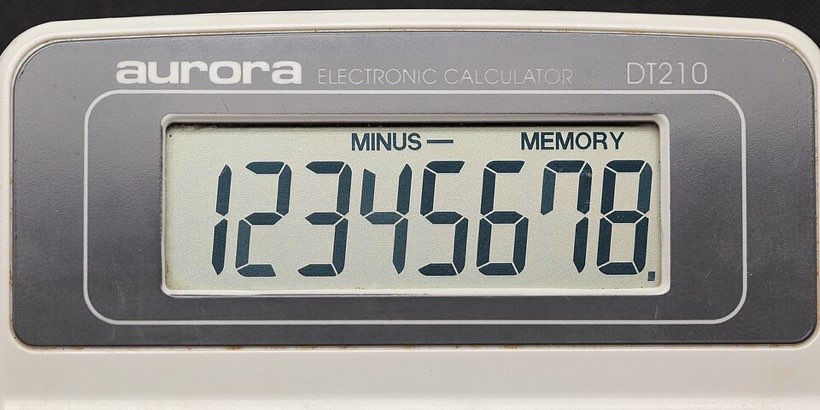
Story time: The calculator argument
Rafi typed 3 + 4 × 2 and got 11. His sister got 14 on paper. “The calculator is broken!” said Rafi. Their teacher smiled: “No – multiplication comes before addition. 3 + 8 = 11.” “If you want 14, use brackets: (3 + 4) × 2.”
Calculators agree
What is 3 + 4 × 2? Some say 14, some say 11. Mathematicians agree on an order of operations: the answer is 11.
A calculator follows the order of operations.
BIDMAS
3 + 4 × 2 = 3 + 8 = 11. (3 + 4) × 2 = 7 × 2 = 14. Brackets change the order.
Remember BIDMAS.
Worked example
- 20 − 12 ÷ 4 + 1.
- Divide first: 12 ÷ 4 = 3.
- 20 − 3 + 1 = 18.
Negative numbers
Negative numbers are less than 0. −7 < −2 because −7 is further left. The difference between −7 and 3 is 10.
−7 is less than 3. Counting from −7 to 3 is 10 steps.
Adding and subtracting integers
Adding moves right; subtracting moves left. 4 − 9 = −5. −3 + 8 = 5.
4 − 9 = −5: jump 9 to the left.
Your turn: The temperature is −4 °C and rises by 9 degrees. What is it now?
Did you know? Bank statements show money owed as negative numbers.
Key words
- order of operations
- The agreed order: brackets, then × and ÷, then + and −.
- brackets
- Show which part to work out first.
- negative number
- A number less than zero.
- integer
- A whole number: positive, negative or zero.
Meet the mathematician: Robert Recorde
about 1512–1558 · Tenby, Wales
Robert Recorde was a doctor and maths teacher. In 1557 he invented the equals sign =, using two parallel lines. He wrote that “no two things can be more equal” than two parallel lines. He also wrote maths books in English so that ordinary people could learn.
Activity: Target number
You need: digit cards, operation cards + − × ÷ ( )
- Pick 4 digit cards.
- Use operations and brackets to make exactly 24.
- Write your calculation with correct order.
- Check on a calculator.
Think and talk
- Why do we need an agreed order of operations?
- Where do you see negative numbers?
- Is −10 bigger or smaller than −1?
What I learnt
- I can use the order of operations.
- I can order and calculate with negative numbers.