Grade 5 · Unit 1: Number and place value
Millions, crore and thousandths
From very big to very small.
Story time: Seventeen crore people
On the news, Nadia heard: “Bangladesh’s population is about 17 crore.” Her cousin in London said, “That is about 170 million.” “Is that the same?” asked Nadia. They wrote both: 17,00,00,000 and 170 000 000. Same number, two ways – and the same digits, just grouped differently.
The population of Bangladesh
Bangladesh has about 17 crore people – about 170 million. Big numbers like this need millions and crores. Small measurements need thousandths.
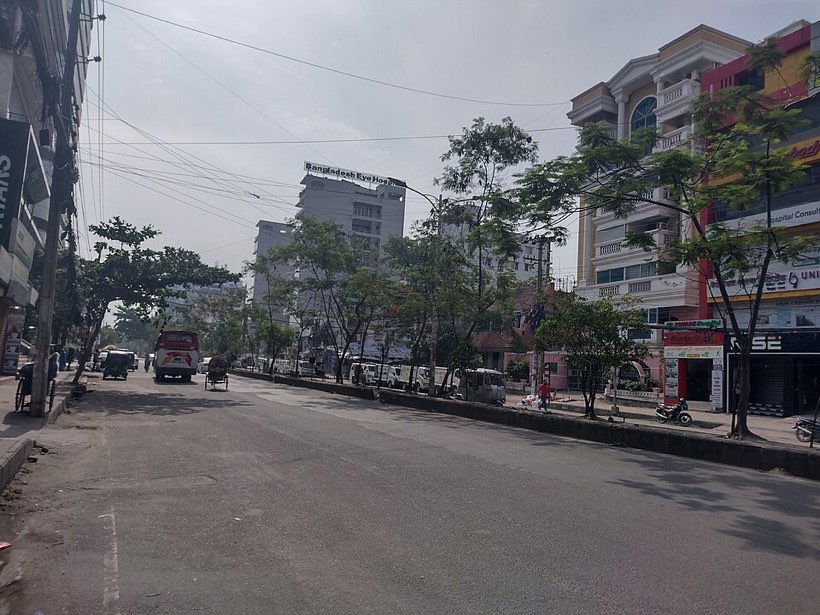
A busy street in Dhaka.
Millions
Each place is 10 times the place to its right. Read in groups of three: 4 million, 307 thousand, 520. In South Asian style: 43,07,520 – 43 lakh, 7 thousand, 520.
4 307 520: 4 millions, 3 hundred thousands, 0 ten thousands, 7 thousands …
Worked example
- What is the value of the 7 in 4 375 000?
- Places from the right: ones, tens, hundreds, thousands, ten thousands, hundred thousands.
- The 7 is in the ten thousands place: 70 000.
Two systems
1 million = 10 lakh. 1 crore = 10 million. News in Bangladesh often uses lakh and crore.
The same numbers, two ways of naming them.
Thousandths
After hundredths comes thousandths. 2.375 kg = 2 kg and 375 g. Multiplying by 10, 100 or 1000 moves digits left; dividing moves them right.
2.375 = 2 ones, 3 tenths, 7 hundredths, 5 thousandths.
Your turn: 0.375 × 1000 = ?
Did you know? The world’s population passed 8 billion (800 crore) in 2022.
Billions
A billion is 1 000 000 000 – a thousand million, or 100 crore. The world has about 8 100 000 000 people: ten digits! Compare big numbers by their number of digits first, then the biggest place.
The world population is about 8.1 billion (2025).
Key words
- million
- 1 000 000 – ten lakh.
- crore
- 1,00,00,000 – ten million.
- thousandth
- 1/1000 = 0.001.
- powers of 10
- 10, 100, 1000 … each 10 times the last.
Meet the mathematician: Satyendra Nath Bose
1894–1974 · Calcutta; professor at the University of Dhaka
Satyendra Nath Bose taught physics at the University of Dhaka from 1921 to 1945. In Dhaka, in 1924, he found a new way to count the tiny particles of light. He sent his paper to Albert Einstein, who was so impressed that he helped publish it. A whole family of particles, the bosons, is named after him.
Activity: Place-value slider
You need: a place-value chart from millions to thousandths, digit cards
- Put 3, 4 and 5 in the chart as 3.45.
- Multiply by 10, 100 and 1000 – slide the digits left.
- Divide by 10, 100 and 1000 – slide them right.
- Write what happens each time.
Think and talk
- Write 2 crore in figures.
- Why does × 1000 move digits three places?
- Where might you see thousandths?
What I learnt
- I can read numbers to millions and crore.
- I can read decimals to thousandths.
- I can multiply and divide by powers of 10.