Grade 4 · Unit 7: Geometric reasoning
Measuring angles
Use a protractor to measure in degrees.
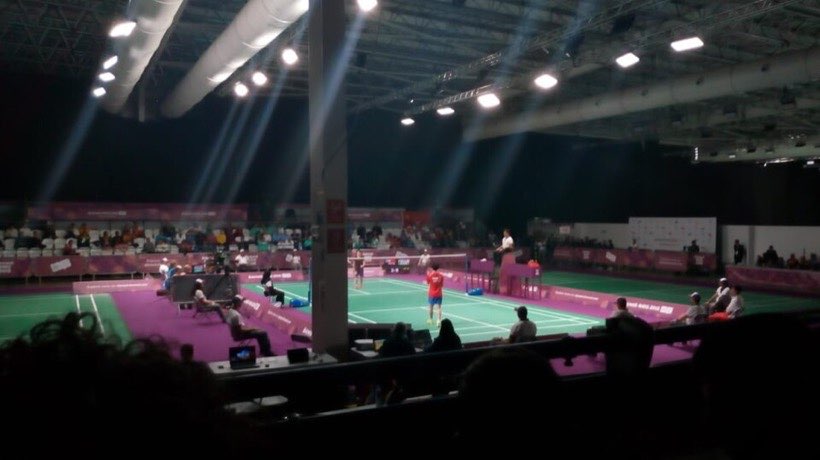
Story time: The badminton smash
Rima practised her badminton smash in the school yard. Her coach said: “Hit the shuttle at a steeper angle!” They used a protractor on a photo: her racket was at 35°. The coach wanted about 60°. With practice her smash got faster – and maths helped!
Angles in sport
Players change the angle of the racket to aim the shuttle. We measure angles in degrees. A protractor helps us measure accurately.
Badminton players hit the shuttle at different angles.
Using a protractor
Put the centre of the protractor on the vertex. Line up 0° with one arm. Read where the other arm crosses the scale: 65°.
Place the centre on the vertex and 0 on one arm.
Your turn: An angle measures 125°. Is it acute or obtuse?
Types of angle
Always estimate first: acute or obtuse? This stops you reading the wrong scale. A reflex angle is more than a half turn.
Estimate the type first, then measure.
Angles on a line
A straight line makes 180°. If one angle is 125°, the other is 180° − 125° = 55°. Angles around a point add to 360°.
Angles on a straight line add to 180°.
Worked example
- Three angles meet at a point: 130°, 90° and ?.
- Angles at a point add to 360°.
- 360 − 130 − 90 = 140°.
Did you know? The idea of 360° in a circle comes from ancient Babylon.
Compass turns
Turning from north to east is a quarter turn clockwise: 90°. North to south is a half turn: 180°. Draw straight, reflex and obtuse angles with a ruler and protractor.
N to E is a quarter turn clockwise: 90°.
Key words
- protractor
- A tool for measuring angles in degrees.
- degree
- The unit of angle (°). A full turn is 360°.
- reflex angle
- An angle bigger than 180°.
Meet the mathematician: Al-Battani
about 858–929 · Harran (now Türkiye)
Al-Battani was an astronomer who measured angles in the sky very precisely. He worked out the length of a year as 365 days, 5 hours, 46 minutes and 24 seconds – very close to the true value. He used trigonometry, the maths of angles and triangles. European astronomers used his tables for centuries.
Activity: Angle measuring
You need: protractor, worksheet of angles, ruler
- Estimate each angle.
- Measure it with a protractor.
- Record both and find the difference.
- Draw angles of 40°, 110° and 90°.
Think and talk
- Why must you estimate before measuring?
- Which scale on the protractor should you use?
- Find angles in the classroom that are acute, right and obtuse.
What I learnt
- I can measure angles with a protractor.
- I can classify angles.
- I know angles on a line add to 180°.