Chance events
Use fractions to describe chance.
Story time: The raffle at the fair
At the school fair, 100 raffle tickets were sold. Arif bought 5. “What is my chance of winning?” he asked. 5 out of 100: 5/100, or 1/20. “Not likely,” said his sister, “but possible!” He did not win – but he had fun.
Lucky draws
In a raffle of 100 tickets, you have 1 ticket. Your chance of winning is 1 in 100. We can write probability as a fraction: 1/100.
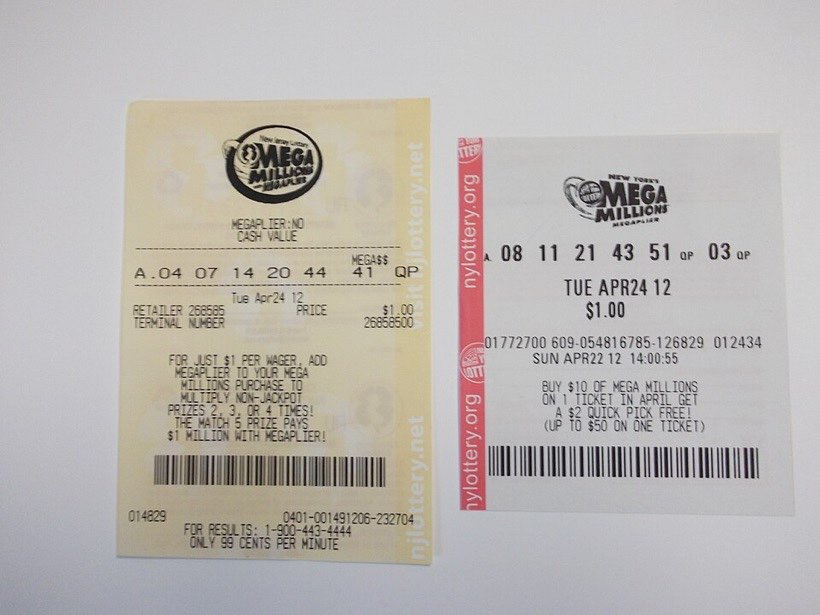
Lottery tickets: each ticket has only a small chance of winning.
Probability as a fraction
There are 4 equally likely sections. 2 are red, so P(red) = 2/4 = ½. P(green) = ¼.
P(red) = 2/4 = ½
Worked example
- A bag has 3 red and 5 blue counters.
- There are 8 counters altogether.
- P(red) = 3/8.
The probability scale
All probabilities are between 0 and 1. P(rolling a 7 on a dice) = 0. P(rolling less than 7) = 1.
0 impossible · ¼ unlikely · ½ even · ¾ likely · 1 certain
Counting outcomes
Count the outcomes you want (favourable). Divide by all possible outcomes. This works when outcomes are equally likely.
P = favourable outcomes ÷ total outcomes.
Your turn: P(rolling a number greater than 4 on a dice)?
Did you know? Weather forecasters say “70% chance of rain”, which is a probability of 0.7.
Tree diagrams and fair games
A tree diagram shows all outcomes: HH, HT, TH, TT. P(two heads) = 1 out of 4 = ¼. A game is fair if every player has the same chance of winning.
A tree diagram lists every outcome.
Key words
- probability
- How likely something is, from 0 (impossible) to 1 (certain).
- outcome
- A possible result.
- equally likely
- Outcomes with the same chance.
- event
- One or more outcomes we are interested in.
Meet the mathematician: Pierre de Fermat
1607–1665 · Beaumont-de-Lomagne, France
Fermat was a lawyer who did maths as a hobby – and became one of the greatest mathematicians. In 1654 he and Blaise Pascal wrote letters about how to share prize money fairly in an unfinished game. Their answers started the mathematics of probability. He also left a famous puzzle that took 358 years to solve!
Activity: Design a fair game
You need: paper spinners, dice
- Design a game for two players.
- Work out each player’s probability of winning.
- Is your game fair? Adjust it if not.
- Play it 20 times to test.
Think and talk
- Why can’t a probability be bigger than 1?
- What is P(not red) on the spinner?
- Design a spinner where P(blue) = ⅓.
What I learnt
- I can write probability as a fraction.
- I can use the 0 to 1 scale.
- I can count outcomes.