Grade 4 · Unit 1: Number and place value
Multiplication and division facts
Know your facts to 12 × 12.
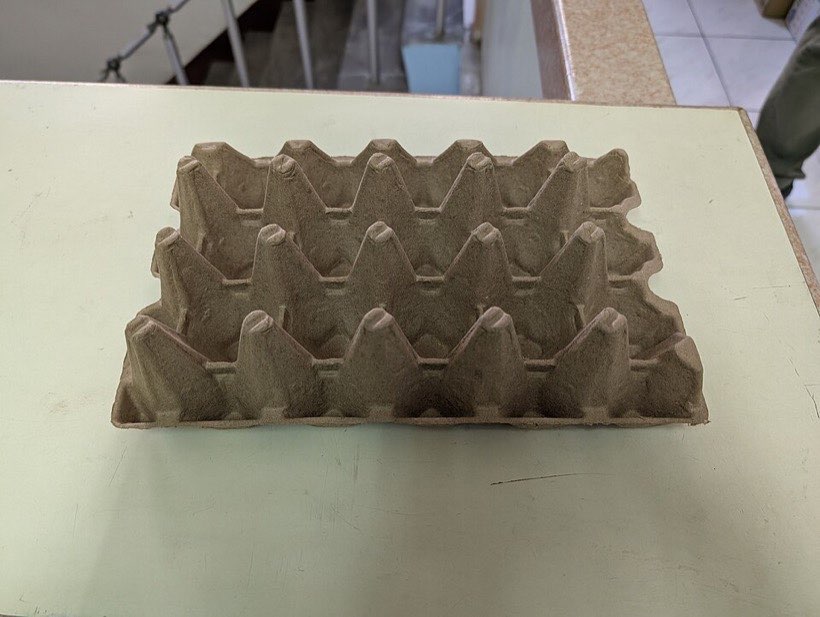
Story time: The egg seller
Moni’s grandmother sells eggs at the haat by the dozen. A customer wanted 7 dozen. “That is 84 eggs,” said Grandmother instantly. “How do you know?” asked Moni. “7 × 10 = 70 and 7 × 2 = 14. 70 + 14 = 84.” Moni realised the 12 times table is just the 10 table plus the 2 table.
Eggs by the dozen
A dozen means 12. 7 dozen eggs = 7 × 12 = 84 eggs. Fluent facts make problems quicker.
Eggs are often sold by the dozen (12) or in trays of 30.
Multiplication square
Each product is in a row and a column. The square is symmetrical: 7 × 8 = 8 × 7. Learn the facts you find hardest first.
Part of a 12 × 12 multiplication square.
Division from multiplication
Each multiplication fact gives two division facts. The answer to a division is the quotient. 56 ÷ 8 = 7.
7 × 8 = 56, so 56 ÷ 7 = 8 and 56 ÷ 8 = 7.
Your turn: 72 ÷ 8 = ?
Using known facts
× 9: multiply by 10, then subtract one group. × 12: multiply by 10 and by 2, then add. × 11: multiply by 10 and add one more group.
Use easy facts to work out harder ones.
Worked example
- 11 × 7: multiply by 10, then add one more 7.
- 10 × 7 = 70.
- 70 + 7 = 77.
Did you know? There are only 78 different facts in a 12 × 12 square because of commutativity – fewer to learn than you think!
× and ÷ by 10, 100 and 1000
× 10: digits move one place left. × 100: two places. × 1000: three places. ÷ does the opposite: 45 000 ÷ 100 = 450. Parts of a division: 24 ÷ 6 = 4 – dividend 24, divisor 6, quotient 4.
45 × 1000 = 45 000.
Key words
- product
- The answer to a multiplication.
- quotient
- The answer to a division.
- factor
- A number that divides exactly into another.
Meet the mathematician: Hypatia
about 355–415 · Alexandria, Egypt
Hypatia was a famous teacher in Alexandria about 1600 years ago. Students travelled from far away to learn maths and astronomy from her. She wrote explanations of hard maths books to help her students. She is one of the first women mathematicians we know about.
Activity: Fact fluency game
You need: playing cards (A=1, J=11, Q=12), a timer
- Turn over two cards and multiply them.
- Your partner turns two cards for division (product ÷ one card).
- Score a point for each correct answer in 2 minutes.
- Record facts you missed to practise.
Think and talk
- Which facts do you find hardest? Make up a trick.
- Why is the multiplication square symmetrical?
- How many eggs in 9 dozen?
What I learnt
- I know multiplication facts to 12 × 12.
- I can use them to divide.
- I can derive facts from known facts.