3D shapes and nets
Unfold a box to see its net.
Story time: The gift box
Lamia wanted to make a box for her grandmother’s present. She unfolded an old tea box to see how it was made. It opened into a flat shape of six rectangles! “This flat shape is called a net,” said her teacher. “Fold it and it becomes a box again.”
Unfolding a box
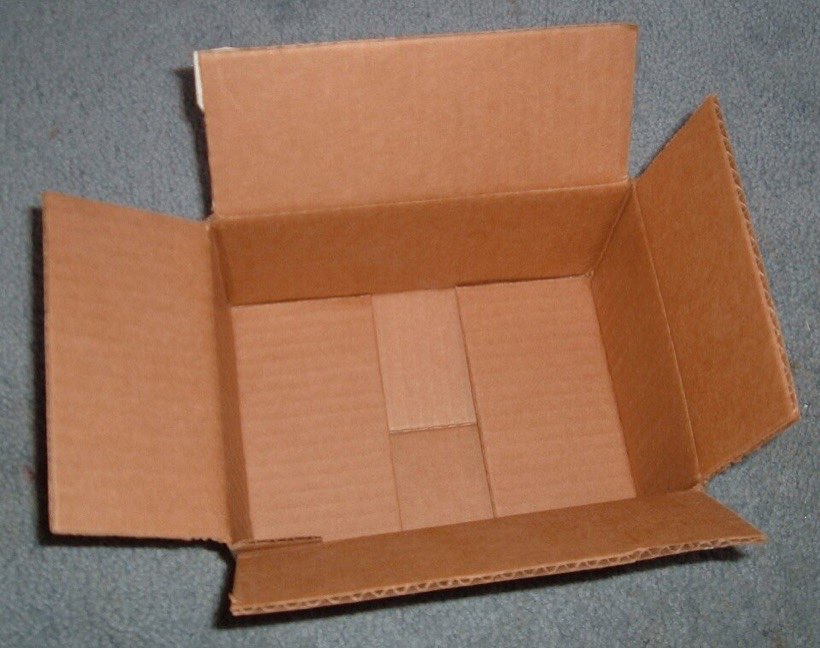
Open out a cardboard box. You get a flat shape called a net. Folding the net makes the box again.
A cardboard box can be opened out flat.
Prisms and pyramids
A prism has two matching ends joined by rectangles. A pyramid has a base and triangles meeting at a point. A cube is a special prism.
Prisms keep the same shape all the way through; pyramids come to a point.
A net of a cube
A cube net has 6 squares. There are 11 different cube nets! Not every 6-square shape folds into a cube.
Six squares that fold into a cube.
Your turn: How many faces does a cube net need?
Faces, edges, vertices
Faces are flat surfaces. Edges are lines where faces meet. Vertices are corners. A triangular prism and a square pyramid both have 5 faces.
Count faces, edges and vertices.
Worked example
- Count the edges of a triangular prism.
- Each triangle end has 3 edges: 3 + 3 = 6.
- 3 more edges join the ends: 9 edges.
Did you know? For these shapes: faces + vertices − edges = 2. Try it!
Key words
- net
- A flat shape that folds up to make a 3D shape.
- prism
- A 3D shape with two identical ends joined by rectangles.
- pyramid
- A 3D shape with a base and triangular faces meeting at a point.
Meet the mathematician: Albrecht Dürer
1471–1528 · Nuremberg, Germany
Albrecht Dürer was a famous artist who also loved geometry. In 1525 he wrote a book about measuring and drawing shapes. In it he showed nets – flat patterns that fold into solid shapes. He is one of the first people known to have drawn nets this way.
Activity: Net makers
You need: squared card, scissors, tape
- Draw a net for a cube on squared card.
- Cut it out and fold it. Does it work?
- Try to find 3 different cube nets.
- Make a net for a cuboid.
Think and talk
- Why can’t every 6-square shape make a cube?
- What shapes are the faces of a triangular prism?
- Where do you see prisms in real life?
What I learnt
- I can describe prisms and pyramids.
- I can recognise nets of 3D shapes.