Grade 3 · Unit 4: Patterns and algebra
Number patterns and rules
Find the rule, extend the pattern.
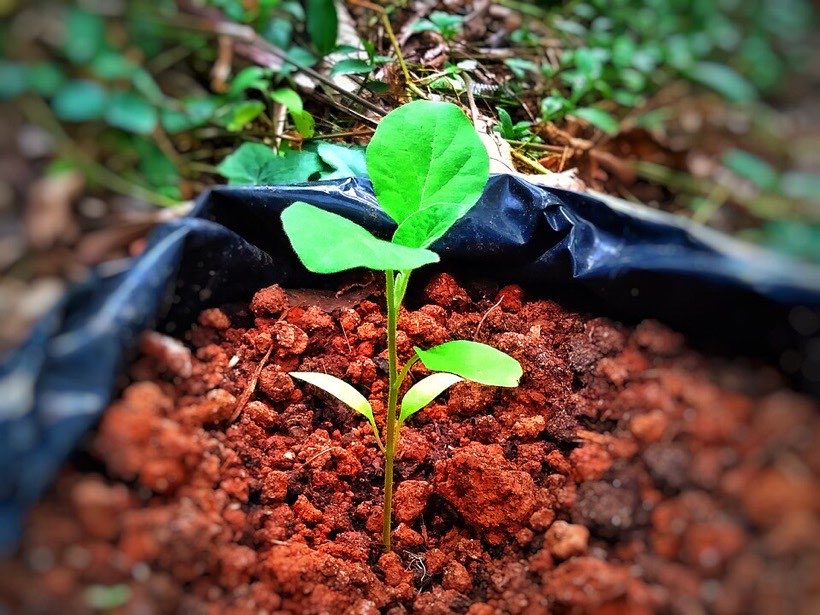
Story time: The magic beans
Tuhin planted a bean. It was 2 cm tall on day 1. Every day it grew 3 cm: 5, 8, 11 … “How tall on day 10?” asked his teacher. Tuhin found the rule: 3 cm a day. 2 + 9 × 3 = 29 cm!
Growing plants
A seedling is 2 cm tall and grows 3 cm a week. 2, 5, 8, 11, 14 … This is a sequence with the rule “add 3”.
Seedlings growing a little more each day.
Extending sequences
Find the difference between terms. 14 − 7 = 7, 21 − 14 = 7. The rule is add 7. Next: 35, 42.
7, 14, 21, 28, 35, 42 – multiples of 7.
Your turn: Continue: 4, 9, 14, 19, … (two more)
Function machines
An input goes in, the rule acts, an output comes out. 3 → 12, 5 → 20. So 8 → 32.
The machine multiplies each input by 4.
Two-step rules
Some rules have two steps. 1 → 3, 2 → 5, 3 → 7: multiply by 2, then add 1. What will 10 become? 21.
Rule: × 2 then + 1.
Worked example
- Rule: × 2 then + 1. Input 6.
- 6 × 2 = 12.
- 12 + 1 = 13. Output 13.
Did you know? Computer programs use rules like function machines.
Patterns in place value
Look down and across the table. What do you notice? Multiplying by 20 is like multiplying by 2, then by 10. Patterns in place value help us calculate quickly. Show a pattern as a table, a drawing or a graph – choose what fits best.
Each column is 10 times the one before.
The core, in a new form
In 1, 3, 4, 1, 3, 4 … the core is 1, 3, 4. Show the same pattern with beads: 1 red, 3 blue, 4 green, again and again. Shrinking patterns go down: 18, 15, 12, 9, 6 – the rule is take away 3.
1, 3, 4 repeating can be shown with beads.
Key words
- sequence
- Numbers that follow a rule.
- term
- Each number in a sequence.
- input
- What goes into a function machine.
- output
- What comes out of a function machine.
Meet the mathematician: Leonardo Fibonacci
about 1170–1250 · Pisa, Italy
Fibonacci learned maths as a boy in North Africa, where his father was a trader. In 1202 he wrote the Liber Abaci, which taught Europe to use the numbers 0 to 9. In it was a puzzle about rabbits that made the pattern 1, 1, 2, 3, 5, 8, 13 … Each number is the sum of the two before. This pattern appears in sunflowers and pine cones!
Activity: Guess my rule
You need: a whiteboard
- One player secretly picks a rule (e.g. × 3 + 1).
- Others call out inputs.
- The rule-maker writes the outputs.
- The first to guess the rule wins.
Think and talk
- How do you find the rule of a sequence?
- Make a function machine for a partner.
- Can two different rules give the same first two outputs?
What I learnt
- I can find and extend number sequences.
- I can use function machines.
- I can describe two-step rules.