Shopping and budgets
Can we buy everything on the list?
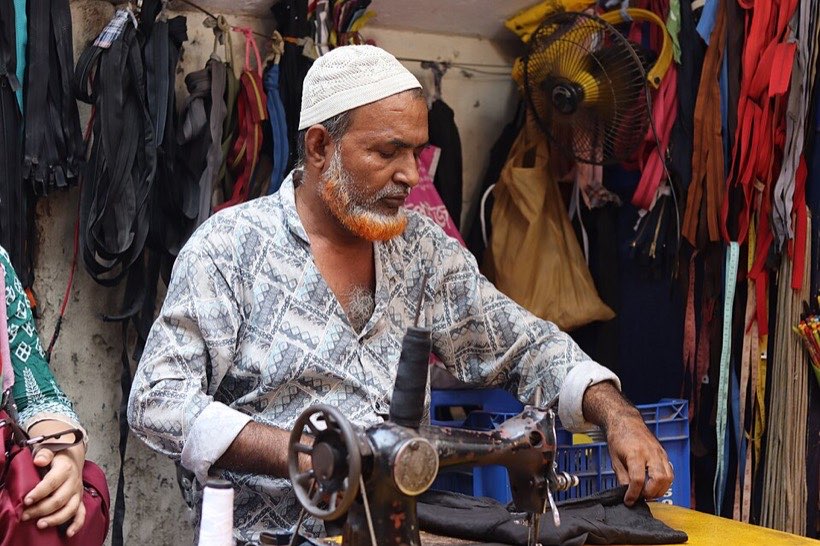
Story time: Shopping for Eid
Before Eid, Ayesha had ৳1500 saved. She wanted a kurta for ৳650, sandals for ৳380 and bangles for ৳95. She added them: ৳1125. “I have ৳375 left!” She gave ৳300 to help a neighbour’s family, and kept ৳75 for sweets.
Shopping for Eid
Before Eid, families buy new clothes and food. They plan a budget so they do not spend too much. Maths helps them decide what they can afford.
Families shop at markets before festivals.
Adding prices
Kurta + sandals = ৳650 + ৳380 = ৳1030. Add the cap: ৳1030 + ৳120 = ৳1150. This is the total cost.
A price list from a market stall.
Worked example
- Kurta ৳650 + sandals ৳380.
- 600 + 300 = 900 and 50 + 80 = 130.
- 900 + 130 = ৳1030.
Giving change
You pay with three ৳500 notes: ৳1500. Count up from ৳1150 to ৳1500. 50 + 300 = ৳350 change.
Pay ৳1500 for ৳1150: count up 50 + 300 = ৳350 change.
Staying in budget
Your budget is ৳1200. Plan A (kurta, sandals, bangles, cap) costs ৳1245 – too much. Plan B (kurta, sandals, cap) costs ৳1150 – it fits, with ৳50 left.
Plan B fits the budget of ৳1200; Plan A does not.
Your turn: You have ৳1000 and spend ৳640. How much is left?
Did you know? A 10% discount on ৳650 saves ৳65.
Taka and dollars
Each country has its own money, called its currency. In 2025, 1 US dollar was worth about ৳120 (a model value – the rate changes every day). So $5 is about 5 × 120 = ৳600.
Different countries use different money.
Your turn: If $1 = ৳120, how many taka is $3?
Key words
- budget
- The amount of money you plan to spend.
- total cost
- All the prices added together.
- change
- Money given back when you pay more than the cost.
- discount
- Money taken off the usual price.
Meet the mathematician: Luca Pacioli
1447–1517 · Tuscany, Italy
Luca Pacioli was a teacher and mathematician. In 1494 he wrote a book explaining how merchants should record money coming in and going out. This way of keeping accounts is still used by businesses today. He was a friend of the artist Leonardo da Vinci and taught him maths.
Activity: Festival budget
You need: shop price lists, play money
- You have ৳1000 to spend for a festival.
- Choose items and find the total.
- Check you stayed within budget.
- Pay and work out your change.
Think and talk
- Why do families make a budget?
- Which items would you leave out to save money?
- How do you check change quickly?
What I learnt
- I can add prices to find a total cost.
- I can work out change.
- I can plan within a budget.