How scientists measured and understood light
Ibn al-Haytham, Newton and Rømer – a thousand years of discoveries.
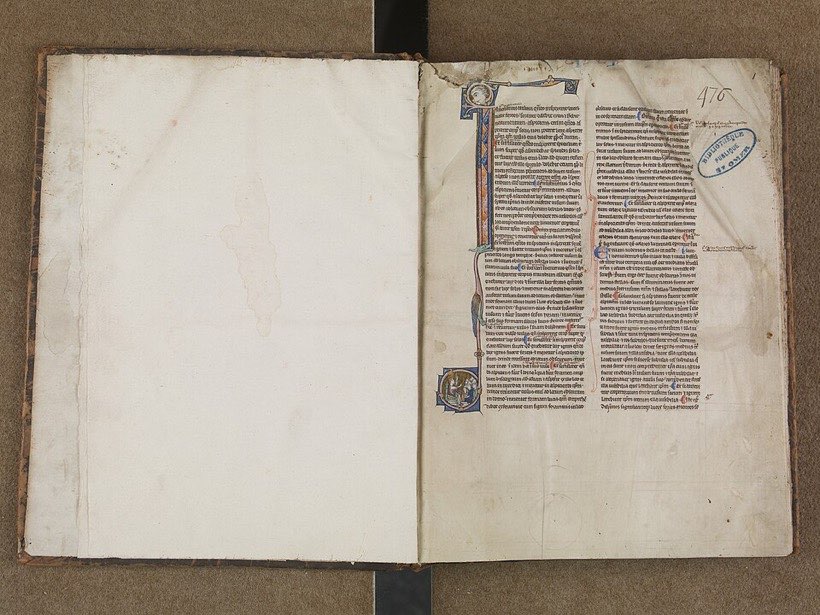
Ibn al-Haytham
About 1,000 years ago, Ibn al-Haytham, a scientist working in Cairo, studied light with careful experiments. He showed that we see when light travels from objects into our eyes. He is often called the father of optics, and an early champion of testing ideas by experiment.
Ibn al-Haytham’s Book of Optics was translated into Latin and studied by European scientists for hundreds of years.
The camera obscura
Ibn al-Haytham studied the camera obscura: a dark room with a tiny hole in one wall. Light through the hole makes an upside-down image of the outside on the opposite wall. This shows that light travels in straight lines. It is how cameras and our eyes work.
The word camera comes from camera obscura, which means “dark room” in Latin.
Newton’s colours
In the 1660s, Isaac Newton shone sunlight through a prism. He showed that white light is made of a spectrum of colours. A second prism could join the colours back into white light.
Newton also built a new kind of telescope that used a curved mirror instead of lenses.
How fast is light?
In 1676, Ole Rømer timed the moons of Jupiter and noticed they seemed early or late. He realised light takes time to cross space, and estimated its speed. Today we know light travels at about 300,000 km every second.
Scientists build on each other’s work. Each new theory is tested with experiments, and improved when new evidence is found.
What I learnt
- I can describe how scientists such as Ibn al-Haytham, Newton and Rømer helped us understand light.
- I know that scientific ideas are tested with experiments and evidence.